Monday, 1 June 2020

Digital Transformation Checklist for your Business

The term ‘Industry 4.0’ refers to the fourth industrial revolution, driven by Digital Transformation, and signifies a qualitative leap in the organization, management, and working within the distinct industrial spheres.
The transition of people to interact with their environment is evident which has tremendously changed, encouraged by the technological revolution that is all about automation and data exchange derived from:
  • ARTIFICIAL INTELLIGENCE
  • NANOTECHNOLOGY 
  • INTERNET OF THINGS
  • CLOUD COMPUTING
  • ROBOTICS
  • MACHINE-TO-MACHINE COMMUNICATION
The technologies named might be less in words but the potential and power they possess in uncomparable with their evolving subsets and descendants (like machine learning, AR/VR, IOE, etc.).
Today, we no longer talk about integrating technology for the sake of integrating it, but about transforming our ways of doing business, so we cannot allow ourselves to make decisions based on intuition, we need something else to imbue ourselves with Digital Transformation.

What is Digital Transformation?

The introduction of digital technologies in the industry allows the hybridization between the physical world and the digital world, making it possible to link the physical world (devices, materials, products, machinery, and facilities) to the digital world (automated systems). 
This connection enables devices and systems to collaborate with each other and with other systems to create a smart tech world full of machine intelligence and further envisioned to go beyond the current revolution.
The whole concept of Digital Transformation can be simply put as the process of converting the entire business environment into data that can be analyzed and exploited where the element “Data” has a leading role since, when exploited, it allows to obtain operational and strategic advantages for organizations.
DATA is the core substance of business reinvention during the present hyper-competitive time where intelligent management of proliferation of data set grounds for digital revolution across the global businesses.
The Digital universe of 2020 will generate around 40 trillion gigabytes(40 zettabytes) of data. IDC’s report on data (2010) predicted that the digital universe would double every two years until 2020 that raises brows on the question of how fast data is growing.
Although most companies have already developed models based on new technologies in certain critical areas such as marketing, sales, or IT, there is still a long way to go that affects different fields. In this sense, it is noteworthy that companies still do not perceive the positive repercussions for adapting their culture to this new reality for the performance of the organization.
In effect, the analysis of the return on investment in digitization is still too linked to the areas of marketing and sales, but companies do not see the importance of the people in the organization in this process or the potential of digital transformation.

Why Does Digital Transformation Matter?

Industry 4.0 transcends various sectors of society due to the fact that it modifies the way in which day-to-day activities are carried out and has a significant impact on ecosystems since it allows interactions at each point of the network.
Unlike the 3rd Industrial revolution in which the turning point was the incorporation of PLCs or Automata, Robotics, and Supervision Systems, for Industrial Automation, in this New Industrial Revolution, the new actors are incorporated into all these existing Systems (Automata, Robots, and machines), creating a Global Intelligent System.

The Business Perspective

Digital transformation is not just about incorporating technologies in a vague way, it is a process that seeks to reorganize a company’s working method or strategy. With the digital transformation, you can rework products and services, reorganize methodologies and strategies, optimize all processes and departments, save time and costs for design, materials, transportation … always looking for greater productivity or to provide more value to the end customer. 
In other words, digital transformation is not subject to a specific technology. It is not necessary that we use Big Data, IoT, Machine Learning, cloud storage, etc. so that we can consider ourselves a digitized company, it is enough to use technology (whatever it is) in an intelligent way to achieve certain objectives or set implement a business strategy.
Digital Transformation is complex and profound, in addition, involves an effort on the part of the entire organization. There is no single application or technology that enables Digital Transformation, but it depends on each sector, each company, and each case. 
In fact, any change that involves automating processes, minimizing costs or maximizing efficiency can mean a Digital Transformation, even if it has not been necessary to implement any new technology. That is, technology is only a means, not the goal itself. 
Thus, we can say it without any traces of doubt that Digital Transformation is not an option for enterprises, but a mandatory step for any company that wants to continue competing in this new business environment.

Digital Transformations Across Industries

With revolutions, improvements, and modifications in technology, operations, processes, workflows, digital transformation is here to impact our business strategies as well, in the way we monetize our value proposition. 
With digitization and access to data, we can make decisions, sell and enter in a completely different way than we have done until now.
In this sense, we will focus our decision-making on artificial intelligence since we will be able to decide based on patterns generated by algorithms (machine learning) that will define future scenarios, thus passing from intuition to information and knowledge.
Digitization, of society in general and of industry, represents both an opportunity and a challenge for all business industries. 
These challenges may come from the hyperconnected client, with great access to information and that is increasingly demanding from companies, or from the necessary adaptation of the industry to new technologies.
The digital transformation of the industry involves the application of a set of technologies throughout the value chain of the industry. These changes generate benefits both at the process, product, and business model levels.
#Process: 
The digital transformation applied to processes involves incorporating 4.0 technologies to make them more efficient and flexible, either by optimizing existing ones or changing them.
An example would be 3D printing, which makes prototyping much faster and streamlines the design process. On the other hand, robotics allows processes to be made more flexible so that they are better adapted to customer requirements.
#Product: 
The digitization of the products of the industry can suppose the incorporation of technology to the existing ones, thus improving its functionalities, or allowing the appearance of new ones.
An example that illustrates this is the automobile and its evolution towards integration with electronics and digital components, which in new developments already represents 45% of the value of the product.
#Business Model: 
Industry 4.0 and its technologies also enable the emergence of new business models, by changing the way a product or service is made available to customers. The digital transformation allows, for example, to incorporate sensors to vehicles, enabling a new business model that consists of renting cars by the hour (‘car sharing’).
Overall, the application of digital technologies guarantees greater efficiency (optimization of energy resources or raw materials and reduction of costs), greater flexibility (possibility of customizing products), and shorter deadlines (shortening the customer’s waiting time to obtain their purchase).
Let’s checkout the advantages in detail:

Digital Transformation Benefits for Organizations

We must also be aware that the impact of the digital transformation is accompanied by a series of benefits for the organization, thus improving internal performance and the relationship with customers. Here are some of them:
#Improves worker satisfaction 
Thanks to digital transformation, employees become more productive and their operational efficiency also increases.
#Improves the customer experience 
Digitizing some company processes increases customer retention levels. In addition, digital channels allow you to interact with your customers in an easier and more dynamic way.
#IT cost savings 
The implementation of Cloud Computing services and digital transformation are relevant aspects for reducing economic costs.
#Increase in productivity 
Decision making becomes easier and more agile with the help of digital tools. In addition, these tools add value: how can you evaluate your processes, analyze decision making, etc.
#New business opportunities 
Transformation and innovation go together. Technology provides new skills and new business processes that favor innovation and the impulse of ideas.
Therefore, the digital transformation must be a progressive but constant process at the same time. Companies cannot postpone their digital transformation any longer if they want to continue competing in a changing and increasingly demanding market.

Digital Age Calling…

Digital transformation is the reinvention of an organization through the use of digital technology, to optimize the way of working of the company and its employees. Organizations must update and implement new technologies, tools, and platforms that are increasingly necessary for business life. 
Without this adaptability, companies can fall into obsolescence.
The mere use of technology is not enough to take the step towards digital transformation. You have to raise awareness and train the entire team so that they get the most out of digital tools in their day to day.

Wednesday, 27 May 2020

X-Purpose Ready to Use Online Delivery Mobile App [Grocery, Food, Pharmacy, And More]


Apps are a great opportunity to present various products and services in a dynamic and accessible way and their use became popular to the extent that it is almost mandatory for all companies or brands to have their downloadable mobile version.
From airline booking to ordering lunch to instant online payments to track shipping and orders, mobile applications have become inevitable in almost all sectors of activity. With the technology advancing with leaps and bounds, the world seems to become smaller and smaller until it fits in the palm of our hand. 
Today, amid the Corona crisis, many business companies are orienting their pivot to develop multipurpose mobile applications for delivery of almost all the essential items and products to the doorstep of people.
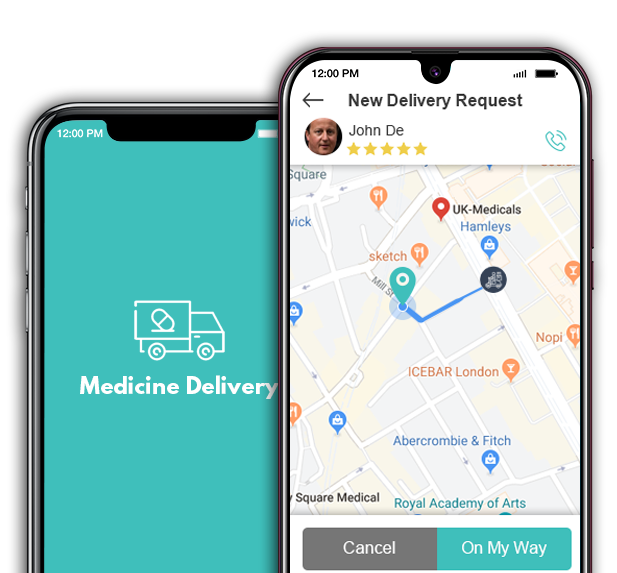
With our X-Purpose app, you can move packages, hot meals/food orders, objects, medical supplies, and many more essentials.

Stats & Real Facts Concerning the Online Market, Purchase, and Delivery

In this unexpected situation and time, some sectors didn’t become too vulnerable to service disruptions or recessions with the blessing of technology. Many food and catering businesses preferred to build their apps while many others collaborated with other third-party vendors to run their business anyhow.
Many small/medium establishments made inclination to local food delivery services and many online initiatives came upfront to support local restaurants that offered to order food online or buying vouchers to support their livelihood.
Statista Report speaks, 
  • The online food Delivery segment accounts for (US) $136,431 million as of 2020.
  • The food industry is expected to portray a rise of 7.5% in the revenue (annually), setting the market volume to reach US$182,327m by 2024. (Source)
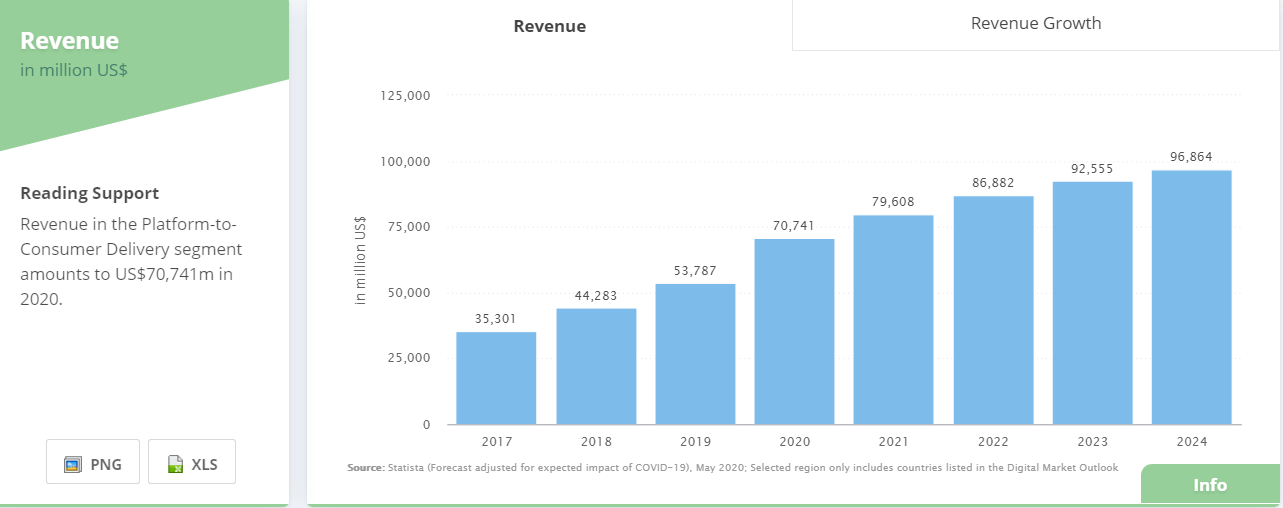
  • Platform-to-Consumer Delivery becomes the largest sphere of the market possessing the market volume of US$70,741m, presently.
  • Revenue is expected to show an annual growth rate (CAGR 2020-2024) of 8.2%, resulting in a market volume of US$96,864m by 2024.
  • The average revenue per user (ARPU) currently amounts to US$100.38.
  • The highest revenue in these sectors is generated in China (US$37,708m in 2020) when compared globally. (Source)
Platform to Customer Delivery Insights 2020
Mobile applications increase the profitability of the business and have made available to users various functionalities that improve their experience and lead them to ask for more.
Considering the present-day real-life circumstances, NetSet Software Solutions decided to make a contribution to the community via delivering an enterprise-grade digital mobile app solution in the gloomy days which are, nevertheless, temporary in status. 
Our all-in-one delivery app, powered with cutting edge technologies, ensures that the consumer gets their necessities delivered at their defined location with just the efforts of a few clicks and taps.
Before running down to know about the in and out of our feature-rich app, let’s get ourselves acknowledged with the percentage of the vote given to online buying of food in the US.
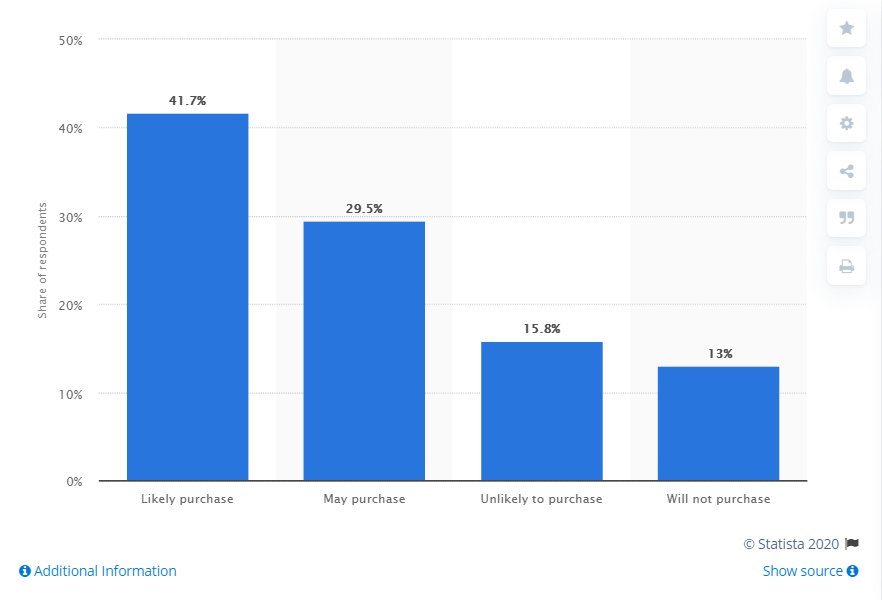
Consumers’ percentage count in the US who asserted the likeness and unlikeness of purchasing restaurant food delivery online when self-isolated at home due to the coronavirus as of March 2020
A recent survey conducted in March 2020 states that 41.7% of the United States consumers likely paid attention to ordering restaurant food online while self quarantined during the spread of the pandemic. Only a few (29.5%) showed hesitation towards online food purchasing and a very less percent refrained themselves to the idea.

2020 Uber X Mobile Applications: Reforming Catering and Logistic Sectors

The transition of running online businesses took a different shape in 2020, yet many fortunate companies gained benefits in these tough times, leveraging the power of mobile technology.
The early investment of developing mobile applications is to create strategic mobile solutions that deliver tangible business results in the development of apps that help brands to navigate each and every facet of the digital landscape.
It’s of no surprise that food and product delivery apps have become an instant delight on the App Store and Play Store, thus, presenting golden opportunities for many other business types to initiate with such a great business idea that is bound to succeed.
NetSet has been in the mobile app development industry for years and possesses adept team players and top app developers who possess decade-long experience in digital product development, specialized in their own field of technologies.
Encouraged with the Uber X Model, proficient in using Blockchain Technology, hands-on experience on Programming Languages, apt with Testing and Quality Checks, we came up with a power-packed X-Purpose mobile app solely built to aid customers to avail just anything, anywhere, anytime, straight to their doorstep.
“X-Purpose Mobile App: Single App, Single Download, Single Login, but Multiple Benefits.”
The multipurpose app is intended to get the end-user anything from the safety of their home, delivering the order right to their doorstep. The digital product built has extensive rich features, is highly intuitive and interactive, possesses robust functionality, and occupies many other traits.
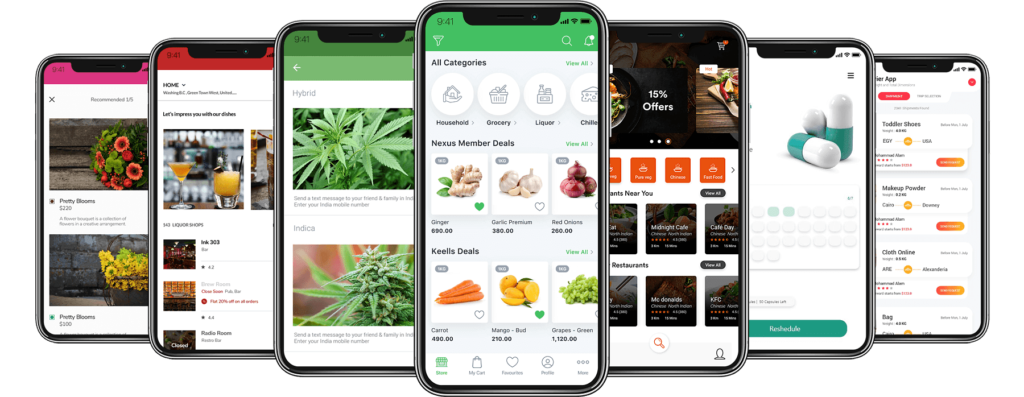
Multipurpose App Flow Diagram (User App)

Single App, Innumerable Deliveries

Starting from food, to grocery to medical stores, you name it and our X-Purpose app can accommodate all, checking its feasibility for the online delivery model. The feature-rich mobile app can execute innumerable deliveries and earn a good deal of revenue accounting for long-term business gains.
The app owner can also update the app as per their choice even after the project deployment as per the trending standards and market demands. This means you can add more categories or store types as per your choice and generate profits like never before.

#FOOD

Let your customers order food online seamlessly and get it delivered at their place within a stipulated interval of time.

#GROCERY

Running out of Veggies? Aid your customers to order their grocery essentials right from the safety of their abode via a user interactive app.

#PHARMACY

Why force your customers to run to the pharmacy? Get the X-Purpose app to deliver their medical supplies straight to their doorstep without any hassles.

Vibrant Features of our X-Purpose(Food/Pharmacy/Grocery) Mobile Delivery App

The digital era has revolutionized the lives of people by offering quick, easy, and hassle-free solutions to their doorstep at affordable prices. This is what our X-Purpose mobile app is intended to do, promoting enhanced user experience with the power of mobile technology.
Our on-demand application has endless features that make it stand out out of the horde, providing all the requisites and mandatory features a business app promises to render.
Check out the other elementary traits offered by the all-in-one delivery app: 

-Explore Nearby Food Outlets/Stores

The app users can view the pharmacies, restaurants, grocery stores, etc. near to their location for placing orders. 
The user gets to see ratings, store distance, and an estimated price range.

-View Products & Select Quantity

The app operator (user) is able to see each product’s description along with its image(s) and can select the quantity before adding it to the cart.

-Filter Products

As per the attributes and features of the product items, users can filter out products, looking at its type, brand, cost, ratings, etc.

-Favorable Payment Options

The app users get easy access to their preferred payment methods such as COD(cash on delivery), Debit/Credit card, App wallet. An option of adding third-party payment vendors is feasible (like Google Pay, etc.) 

-Push Notifications

One of the mandatory aspects of a mobile application that updates users about their product delivery, transaction status, new offers/arrivals, and much more. Push notifications alert the user of all-type updates, promoting UX enhancement.

-Promo Codes, Coupons & Offers

Users can avail the discounts using promo codes or coupons during checkout when the offers are set at the admin’s end.

-View & Track Orders

Active orders can be easily tracked by users to check the status of the placed order where the same section also displays the full details of the past orders. Once the order is accepted by the vendor, users can track the delivery agents live, call, or even message them to get the order updates.

-Multi-Store Checkout Cart

Users can checkout with multiple items from various stores or food outlets within a single cart, effortlessly.

-Preferred Delivery Scheduling

The app also provides customized delivery options, enabling users to schedule their delivery/pickup ahead in the future instead of opting for prompt delivery.

-Social Media Integration

Social media keeps the power of influencing customer’s decisions. Integrating social media platforms within the app offers the users to share their photos/videos of their product/food item sharing their aw-experiences.

-Ratings, Reviews, Feedback & Referrals

Users are given the privilege to rate and review the order, store, delivery agent, and provide feedback regarding their experience with all of them. They can also check the previously given reviews and stars to the vendors and delivery personnel.

What More does Our Multipurpose App Offer?

The development of our X-Purpose mobile delivery app was accomplished with delineate planning and possess the potential of the market they are going to enter from the perspective of market strategy, agile development model, UI/UX design, latest technologies, QA and QC validation, and deployment.
A mobile application developed for delivery of the basic and necessary life components is expected to deliver a myriad of intuitive features with robust functionality that comes up to the expectation of the end-users.   
So here is a listicle that further details the other advantages to expect from the app:
#Market Ready
The all-in-one delivery app is a complete digital solution bolstered with powerful front-end and back-end technologies with tested and proven results. 
It’s enterprise-grade, facilitating the power of customization and personalization to fulfill the present market demands.
#Multipurpose 
Adding the three fundamental options for delivery of food, grocery, and medical supplies, there is room for more add-ons that can match the feasibility of the delivery app ecosystem that outputs positive results.
One platform, serving multiple purposes, results in exceptional business results.   
#Customized
The features and functionality can be added or deleted as per the scope and scale of your business and its requirements. A marketer merely needs to submit an idea, rest is overseen by the NetSet team.
#IP Rights
We offer our clients to take the app credit while reserving the Intellectual Property rights. No surprises, no license fee, no hidden costs.
#Cost Efficient
Save up to 60% on the development of the multipurpose app that is tailored as per your business requirements. Save more on the ready to use the business app with the necessary in-built features, known for its high quality and performance.

Feasible Delivery Options Amid Corona Crisis

#Contactless Delivery
Safety is prioritized in the corona ridden times by featuring a primary trait of contactless delivery in the app. It is one of the prime factors that ensure the safety of all at their respective ends (vendor, delivery agent, and the user). 
#Take Away 
Encouraging freedom of choice, users can pick their orders on their own if they wish them not to be delivered. This is carried out in a systematic way, scheduling the order at the right time and at the right place.
#Safety First 
Standard safety procedures can be recognized by users with the provision of a safety badge. The app owner moderates and provides the same to its collaborators that inform the user that the store follows the standards norms of keeping the safety intact. 

A Call for Quick Digitization During COVID 19

We can create an application similar to Lima Delivery, Uber Eats, Zomato, Glovo, Rappi, etc. Restaurants and cinemas will be closed in 2020 due to confinement. They are saying it in many countries, the restaurants are going to close throughout the year.
This is the best time to have an all in one purpose delivery app near at hand and respect quarantine. We develop your multipurpose app in less than 4 weeks!
Because we know that working together and overcoming this crisis together, we are prioritizing the development of our X-Purpose Delivery app for the province and the entire national territory.

Market Delivery App

Make purchases in markets and deliver them immediately or the next day

Delivery App development for Restaurants

Show the restaurant menu to your customers and bring them the menu

Pharmacy Delivery

Show the medications your patients are waiting for.
And, More Customized Options Available!

Shall we talk?

Connect to NetSet Software at https://www.netsetsoftware.com/ and explore more of our realm by visiting our socializing platforms of TwitterLinkedinFacebook, and Instagram
Our platform has been worked with great care and we are providing support to all our clients even post-deployment.

Thursday, 14 May 2020

Top Cross-Platform Mobile Frameworks’ Comparison: React Native vs Xamarin vs Flutter

Mobile Phones, today, are kept at an arm’s distance.
Mobile Applications are already a fundamental part of our daily life.

As every day we all use mobile devices to make purchases, access our bank account, manage our social networks, etc. the two assertions made above, prove to be right certainly.
The development of mobile applications is an emerging business, as almost every passing day, we are connected to more people and more brands via a few clicks and taps on a mobile device.
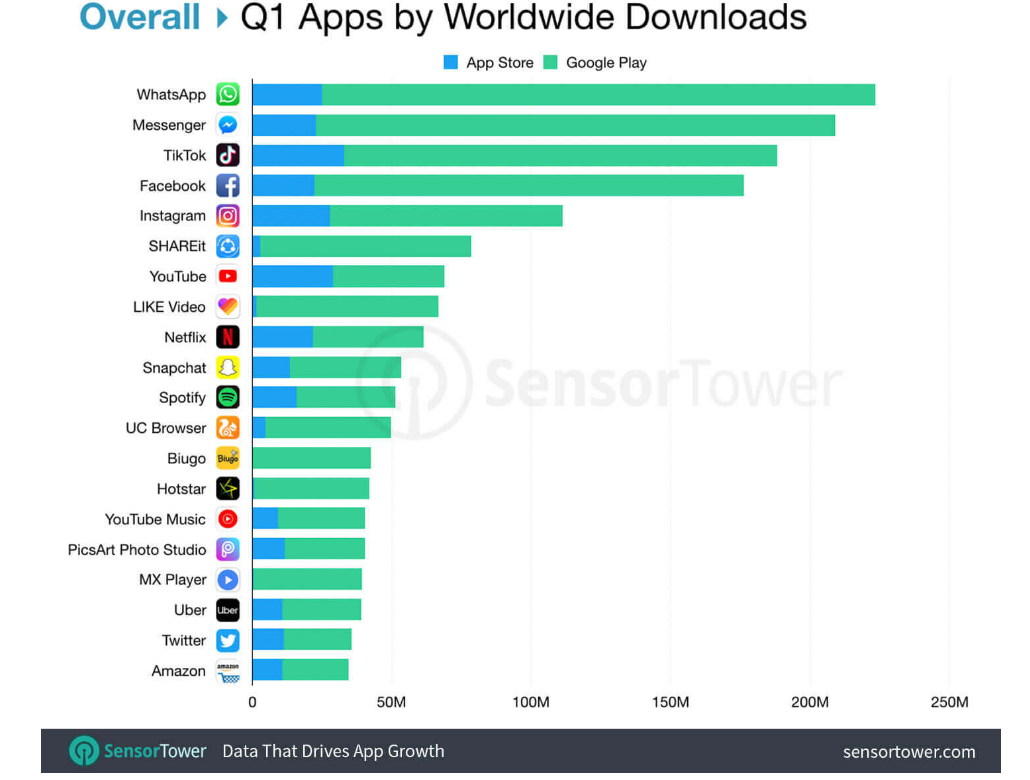
Looking at the graph below, one can make out how much significance an app carries in today’s mobile era. 

Why Cross-Platform App Development?

When the talk is about mobile app development, the stress is upon building robust mobile applications to enhance user experience and take it to the next level, simultaneously, bringing fruitful business gains to the company.
Aligning with our goal and taking a serious toll on app performance when we checkout platforms as the best fit, cross-platform app development seems to be on the top, favored by one and all (Businesses as well as Developers). 
  • Cross-platform app development has a much smoother learning curve than others in the line. 
  • This technology was born to reduce costs, time and facilitate the learning and development of mobile applications, also providing the possibility of creating websites with these developments. 
  • For this reason, we could say that these types of applications are totally multiplatform (Mobile, Tablet, Computer, TV,…) where, with the development of a unique code we can generate applications for the desired platforms. (In the case of mobile, for Android and iOS.)
  • The app development lifecycle span is reduced to almost half with the possibility of 96% code-sharing across distinct platforms.
  • Testing a single codebase or many smaller ones simplifies the testing process and offers high-quality test coverage.

XAMARIN VS REACT NATIVE VS FLUTTER: All in All Comparison

#Flutter
Reinventing the Native Mobile SDK
Framework Development Motive:
  • Show off technical skills and improve corporate brand
  • Streamline in-app development
  • External procurement of framework debug resources
  • Revitalization of the mobile application development industry
#Xamarin
Introducing C # to mobile application development
Framework Development Motive:
  • Corporate Brand Improvement
#React Native
Introducing web front end development method by React to mobile application development.
Framework Development Motive:
  • Show off technical skills and improve corporate brand
  • Streamline in-app development
  • External procurement of framework debug resources
Let’s see an explanation of the motive.
The significance of Xamarin to Xamarin was the direct revenue from selling the framework. Xamarin was acquired by Microsoft only after Xamarin was quite mature, thus, a notable reason for Xamarin to exist at the time of acquisition is to improve the corporate brand.
The immediate motivation for Facebook to start with React Native App Development was predictably to make the mobile experience go beyond what is delivered by HTML5. The purpose of releasing it on OSS is to improve the corporate brand by debugging React Native by the application developer community and showing off the technical capabilities.
[Zuckerberg doesn’t say what’s wrong with HTML5 for them. However, it implies that the quality of the developed product was insufficient. “A great mobile experience requires the highest quality and only native apps can achieve it.”]
The first motivation for Google to start the development of Flutter was to enhance the efficiency of in-house development. Material Design with a plain Android SDK is difficult. In fact, the implementation of Material Design on Android is more advanced in the Flutter version than in the Android SDK version. 
The motivation can also be seen from the early adoption of Flutter in the advertiser app of AdWords, which is the most external mobile app for Google’s business.
Having all that said about how these robust platforms took an industry advent, now we’ll dig deep into each spectrum targeting their architecture, programming languages, platform, and others.

Naturally, React Native adopts the Reactive pattern, which is popular in React.

Inventing the Reactive pattern and bringing it to mobile would be a credit to Facebook.
Flutter also respects React and uses the Reactive pattern.
However, instead of introducing the development method of the web front end, it is built from scratch as a native mobile application development framework.
Xamarin utilizes the MVVM pattern, (Model-View-ViewModel), maintaining a clean separation between app logic and UI aims to resolve many other development glitches to build an intuitive and productive mobile application.


Is the web backend, the biggest use case of C #? With Xamarin, backend developers can leverage the power of C# and can develop mobile apps with C # anyway.

As its name suggests, React Native means that those who were developing the web front end with React can now also develop mobile applications.
Flutter is more ambitious and feels like it mobilizes a wide range of development resources including web backends to mobile application development, centering on existing mobile application developers and web frontend developers. 


Again, the motivation for C # adoption in Xamarin will be to mobilize C # users to develop mobile apps.

Love of C #!
The motivation for adopting Javascript by React Native will also mobilize Javascript users for mobile application development, especially in web front-end development.
Influence of Javascript!
The motivation for adopting Dart in Flutter will be to mobilize users of object-oriented languages ​​for mobile application development widely.
Mobile application developers who are still using Java, Objective-C, also need to consider modern Dart. It seems to be attractive and intuitive. The reason Dart avoids quirky syntax and dares to make it mundane is to reduce the migration hurdles for users of these languages.
Domination of Dart!
By the way, Mr. Hixie, who modified the milestone of Flutter, is a person who was previously working on the specification of HTML5. Perhaps because of that, it seems that the Dart language level is very concerned about the ease of transitioning to Flutter for Web developers.
Anyway, Dart is often criticized for its language features in comparison with Kotlin and Swift, but the Flutter team does not seem to care about language features so much. 

Overview: Fulfill your Business App Requirements as Needed

The Overlords (Google, Facebook, Microsoft…) and the industry leaders have been striving to produce the best ever frameworks and platforms to enhance user experience and developer experience in parallel.
Despite accommodating a fixed set of pros and cons, the market has witnessed infinite amazing and outstanding apps, built using one of these individual frameworks. 
Every business and developer has a predefined set of requirements and criteria set for mobile app development and platform selection, so here is a quick view of the robust platforms described as per distinct parameters of scalability and performance.

Of Course, Flutter! 
Now if we have to answer: Which is the most feasible and best cross-platform for a mobile app development project? I guess we can predict the right say.
Having an upper hand, ignoring a few of its cons, Flutter made itself to be a powerful cross-platform framework that is sound and efficient in crafting beautiful intuitive, performant and productive mobile apps, conforming to the specific business needs.

Flutter’s Rising Popularity

Tech analysis reveals that Flutter occupied 6th place in the list of most popular mobile app development frameworks in the early 2019 and superseded ReactNative in occupying GitHub Stars.
Though flutter emerges as an excellent framework, you can consult a cross-platform app development company for your precise business requirements and get recommendations as per the project scope and budget.
I hope I was able to show you a different landscape of each multi-platform framework, providing the concept-based comparison of the functional elements of each.