Wednesday, 18 November 2020

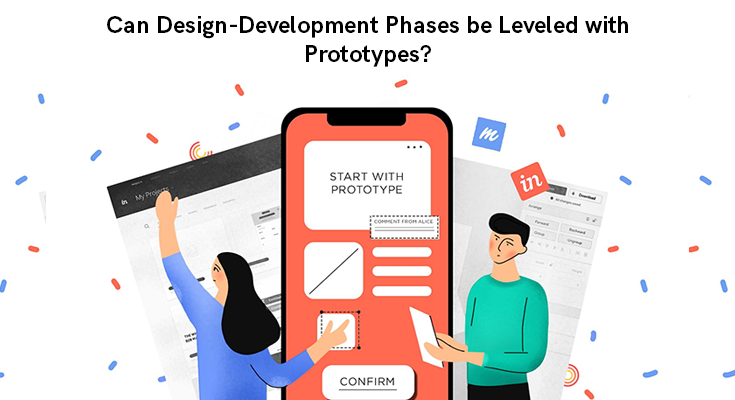
Can Design-Development Phases be Leveled with Prototypes?


Thinking of a big idea and wishing to make it a reality looks so easy on the eyes; entrepreneurs and wantrepreneurs do it almost every day. Nevertheless, the practical implementation involved to shape and build that reality takes a lot of effort and contributions.

Developing an application or a website certainly includes a lot of billable hours consumed by developers, designers, and UX professionals. 

What if there was a way to cut short these hours?
What if there was a probability to improve the app design beforehand?
What if we could validate its necessary features before actually building it?

Prototyping eradicates all the ‘What Ifs’ and turn these probabilities into practical possibilities. 

Prototyping validates the First Step of Project Success.”

Prototyping is a phenomenon built to ease the efforts involved in designing and further development, by identifying and formulating the main direction of these processes. Designing a product goes through several stages and an ideal approach to evaluate its feasibility is implementing rapid app prototyping.

A Prototype is a similar dynamic or working model that is tested and verified with a sample of typical users.

Users play a crucial role in providing feedback as they put light on the areas of focus which on further iterations and improvements gets the final shape that is aesthetically pleasing, intuitive, and as intended.

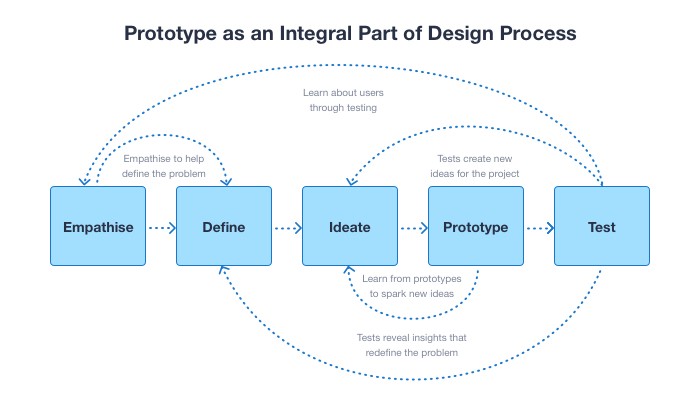
Need for a Prototype?
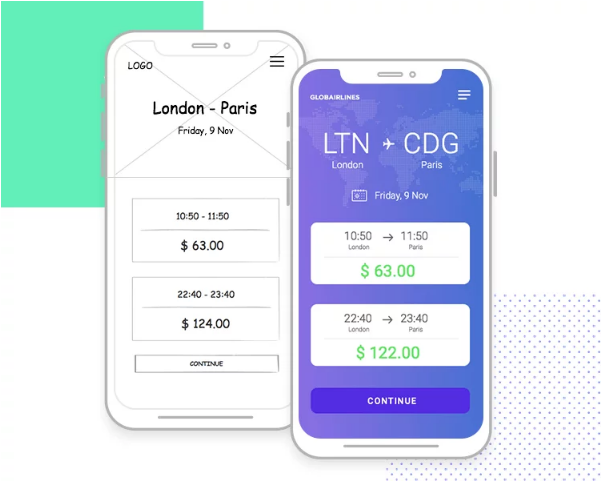
source

To proceed with the successful launch of a prototype, one must invest time in building prototypes to reap extensive advantages while streamlining the design-development processes.

#Enhance App Quality
The presence of a prototype ensures the appropriate degree of acuteness and correctness of developing a web or a mobile application. One can check its navigation, functionality, state of dynamicity, conduct usability testing, and allows to make quick edits before its actual creation.

#Analyze Technical Feasibility
The dynamic paradigms of an idea, formally prototypes, help to analyze the scope and feasibility of the project and identifies the facets which can prove to be a hurdle in actual implementation.

It can further help to spotlight physical, technical, or even financial limitations.

#Risk Reduction
Prototypes directly proportionate crucial process components that are time, budget, and resources. On exercising the prototyping phase many upheavals, functional loopholes, hidden shortcomings get exposed which make it easy for design-development to proceed smoothly.

And it is evident that the risks of projects including prototyping are much lower than the projects that miss out on the prototyping phase before stepping into designing and development.

#Iterate at a Low Cost
As prototyping consists of gathering user/customer views and feedback, it clearly makes it obvious to reconstruct the code and iterate to achieve the best at this stage. The process continues until the conception of an optimal product is achieved.

This act certainly cuts the extra cost and time utilized in the programming phase, where creating several product prototypes is recommended in case of mass production.

#Derive Dedicated Feedback
Many heads, many minds. Each person experimenting with a prototype would have his own vision of the app or product to be made final.

Thus, this prototype exposure enables experts to unify all ideas and analyze the appt from a different perspective, making its ideal form.

#Portray Idea More Clearly
A working dummy of your project idea can help you render information to potential customers more precisely and in a concrete way. This enhances the prospects of finalizing a deal, considerably, possessing an asset in hand which needs fewer alterations.

Furthermore, a well-designed creative prototype can help you better prepare your marketing communication and initiate your pre-sales.

[Prefer Reading: “Latest Trends in Web App Development Dominating 2020 & Beyond”]

A Road-map to App Prototyping Process 

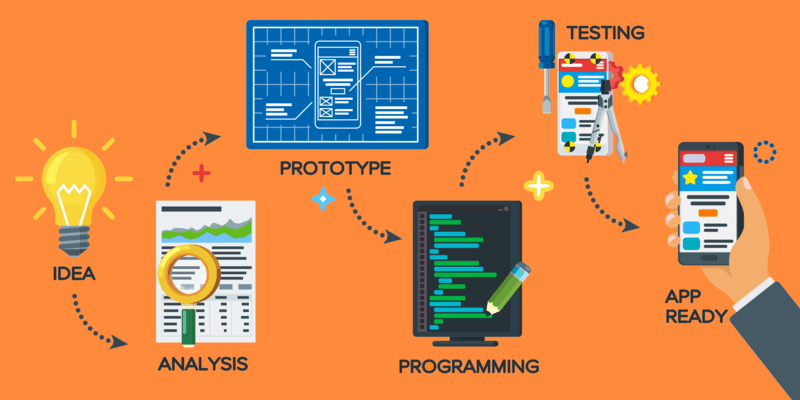
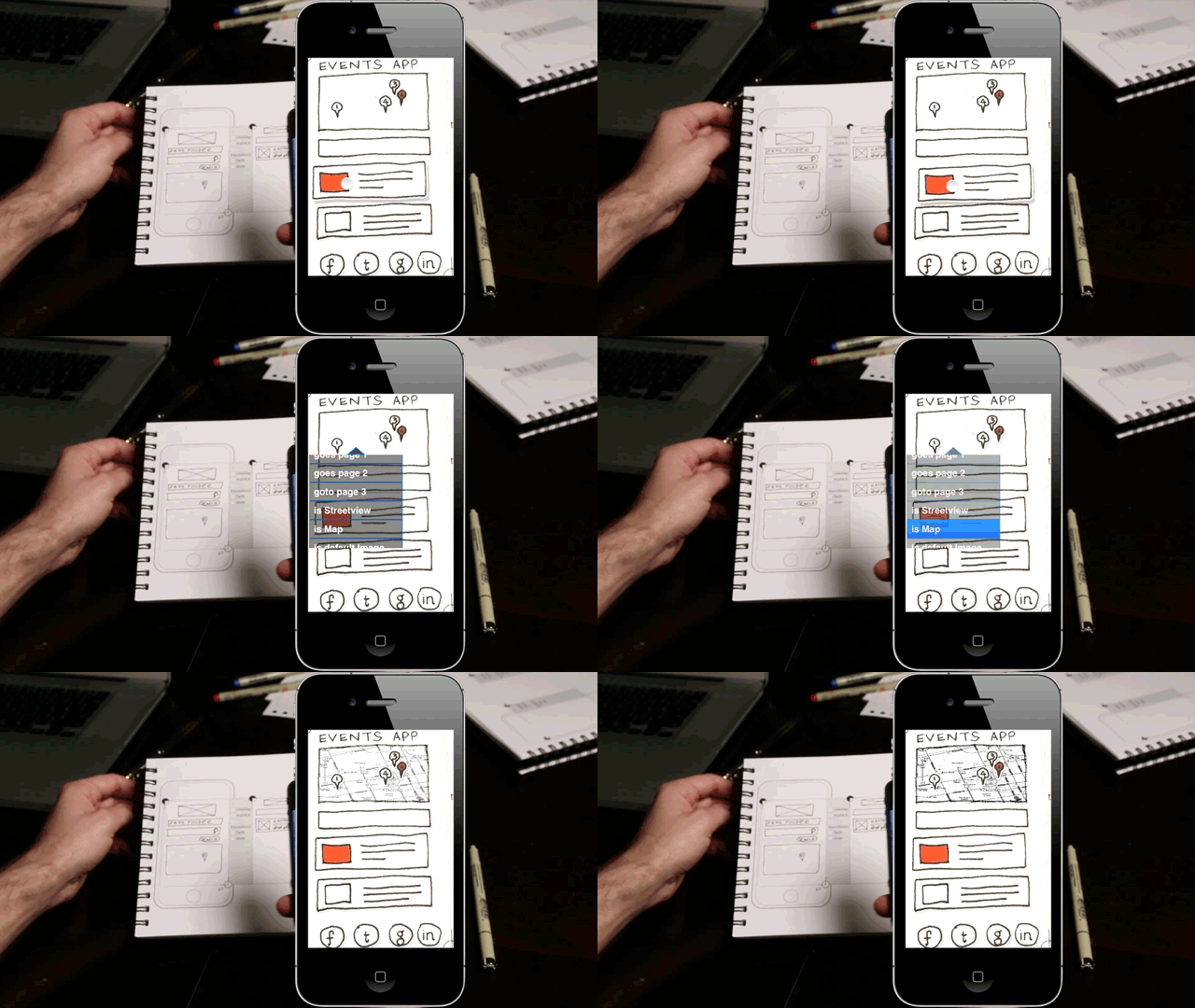
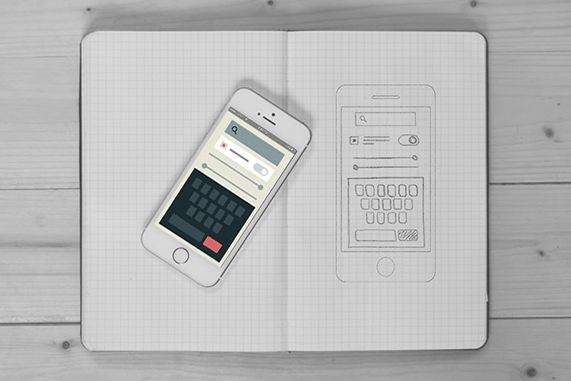
One can build several scaled-down versions of a product which can be as easy as a paper sketch or as complex as a hard-coded version of a functioning app. But there is a general process that leads to creating App Prototypes be it easy or complex.
source

#Understand the Format
First things first, there is a need to analyze the market and set standards to build your strategy. Think of a feasible app idea and focus on its future vision.

Make a checklist of the technologies your app needs to embed and the ones which are available and sort them accordingly as per the scope and budget. Setting up a plan will help you proceed in a streamlined way.

#Determine App Requirements & Scope
Getting an idea is a half story, to complete it, you need to predict its success by looking at the issues it may arise from the user’s perspective. It’s the kind of idea testing you do at your end.

At your level, you may run a hit and trial method asking potential customers to express their expectations from the app which would let you know their intent whether they even need it or not.

#Perform in-depth R&D
This again is a crucial step that needs attention. You must be very proficient while researching the app idea. Make sure that your product must answer the problem statement and solve issues.

Next, dig deep and mark a point on all the competitors and their products and know, how they are different, and compare how your app is going to excel those already present in the market.

This ground-up will help you define the USP (unique selling points) and eliminate potential hurdles coming your way.

#Develop a Prototype
Pen paper sketches are old school now, so try building a prototype with a tool and create a basic version of the idea. The features and functionality added in the prototype are directly influenced by its preset goal.

The areas of focus here are 

  • Adding high-impact obligatory features 
  • Removing potential complexities
  • Focusing on delivering a next-level user experience

#Test & Review
Give a test run to your invention, identify the loopholes, pain points, and also the highlights of the prototype. Testing can be beneficial in driving customer engagement at an early stage by validating it from the people and asking their opinion which will prove advantageous in eradicating the blockers of your app’s success.

#Revamp & Improve
The gathered information in the form of feedback can be well utilized to iterate, make changes, and improve the efficiency of the prototype, and further the entire application. Tweaks and modifications are easy to make at the prototyping phase which hardly impacts any other step. 

Once alterations are done, test it again and make sure not to leave any flaws this time. 

#Repeat
The process might return to the first step if any major segment is missed/skipped or any unknowns remain. The process may also go on repeat if additional testing is required or any extra feature/functionality needs to be added for product enhancement.

[Prefer Reading: “Top 10 Trends that Define the Future of Mobile Applications in 2020 & Beyond”]

Prototyping is essential if you want to test your ideas at an initial state and find new solutions before engaging in the lengthy process of software development. Nobody can afford to keep on designing and coding over and over again and waste resources and time, altering even minor things.

With prototyping, time and money constraints get relaxed where one can try out crazy ideas to turn them into reality after validating and verifying the real use cases.

Wednesday, 11 November 2020

Multi-Experience Evolution: New Experiment in Mobile App Development


Today’s competitive market revolves around delivering the best to the users and this has led brands to prioritize modernization at the utmost level. Every business today tends to expand its value propositions by reaching beyond the boundaries of web and mobile app development to meet exceptional user and industry demands. 

A Universal Fact
The level of user experience delivered to the end-user decides the perception of the brand. 

It’s certainly true that no brand today can afford to take up the blame for a bad user experience as even a single accusing action can destroy the high earned image. Web browsers, despite being the most common touchpoint, takes a back seat when compared with the apps developed for an immersive range of e-devices like smartphones, smartwatch, virtual assistants, etc.

Among all different types of applications built, mobile applications have gained all the hype which urges the mobile app development to necessarily get mature and expand its modalities.

Multi-Experience is all the need!

Gartner says,

“Multi-Experience directly proportionates the Future of App Development.”

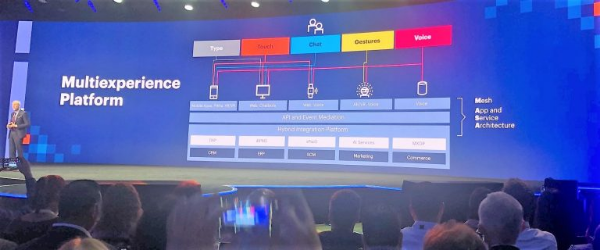
Multi-Experience Development has evolved to focus on valuable use cases, which go beyond a mobile device and an application, thus, supporting the design and creation of integrated, personalized, and environmental experiences that span multiple digital touchpoints.

source

Multi-Experience refers to the various permutations of modalities (like touch, voice, and gesture), devices, and apps that users interact with their digital journey across the various touchpoints.

It’s a technique that brands must consider as a strategy that can bring great unexpected opportunities and drive new innovations and significant changes in the digital world. 

By having a clear knowledge of the customers/consumers and knowing their intent, it can lead enterprises to a multisensory and multimodal consumer experience.

[Prefer Reading: “Mobile App Prototyping: Ideate, Refine, Test at an Early Stage”]

Is there a Better Future for Mobile Applications with Multiexperience?


Source

Developers of mobile applications increasingly launch new value propositions for apps where consumers not only have a unique experience.

The report generated by Gartner states that the apps that they will generate in the future such as wearables, voice, and Augmented Reality will be one of the options that will triumph in the long term, being the attraction phenomenon worldwide at that time.

Traceability of these apps will continue to be carried out both in the present and in the future, according to the indicators that have been carried out with the users, these technological tools will be the key basis to facilitate the day-to-day business chores.

[Prefer Reading: “Top 10 Trends that Define the Future of Mobile Applications in 2020 & Beyond”]

What Uncommon Features be Common in the Futuristic Apps?

#AR and VR

Augmented Reality and Virtual Reality will remarkably transform the future of apps as well as companies of different niche and industry, especially well-known segments of games, entertainment, social media, healthcare, and more.

#Multiscreen

Tablets, iPods, smartphones whose largest screen range between 4.7 to 5.5, offer a wide range of on-screen options. The next-gen applications would be capable of adapting to any screen size with Internet connectivity, be it any smartwatch, projection screen, smartphone, etc.

#Sensors

The use of sensors would be a common play that would be used to collect all forms of data and information to keep the user more aware and informed of the surroundings as well as their own self.

Say, a vehicle would be able to detect that there is danger before can even make out or see it or any heath application would be able to control the disease. Such applications exist scarcely but would be a familiar task of everyday life.

#M-Wallets

The rends of mobile wallets will continue to grow. 

[Prefer Reading: “Survival of the Digitalist: Technology Driven Customer Experience”]

Technologies Used

Visual, voice, and touch interfaces are pre-established and much needed for B2C applications.

However, with the rise of conversational user interfaces, questions are raised upon the technologies being used in Multi-Experience Development. Cloud-hosted Artificial Intelligence is widely used that supports MXDP which will leverage image and voice recognition to the next level.

Further, Augmented Reality, Virtual Reality, IoT will be looked upon for developing multi-experience applications which can interact in a more efficient and human way, supported with distinct electronic devices. 

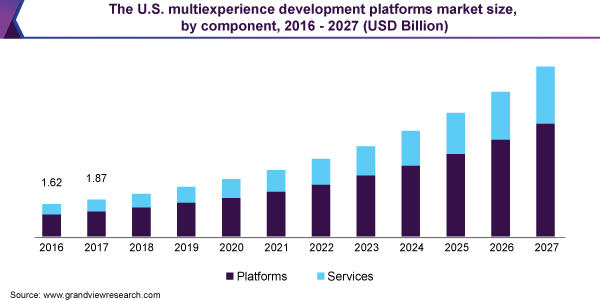
Multi-Experience Development will have a great impact on the development industry and will provide reliability, speed, agility, and enhanced user experience. 

Leading Multi-Experience Development Platforms to Look Upon

Here are a few selected choices that support the intent of MXDP:

-IBM
-GeneXus
-Appian
-Microsoft
-Mendix
-Kony
-Oracle
-Outsystems
-SAP
-Salesforce
-Pega
-Progress
-ServiceNow

source

Final Consideration

Users have normalized the use of apps in their daily life through different devices and platforms. For further ameliorations, in addition to solving the needs of users is focused on offering new multi-experiences.

Multi-Experience is A new way of relating the world and technology, unifying them and expanding the interaction between them.

This type of technology is a great help for most companies where they seek to eliminate obstacles in the service of their clients. They make them live an experience through devices that have alternate realities as virtual reality allows us.

Do you Want to Develop an Idle App for the Future?

NetSet is a top leading IT company in rendering digital product development solutions and specialize in providing consultation and advice on the appropriate technologies to use for pumping your app/product ideas to become the reality of the future.

Our adroit professionals deal with Digital Product DevelopmentCustomized Mobile & Web Apps, and Professional Services and can help you initiate your project with cent percent success prospects.

Wednesday, 4 November 2020

Chatbot Development: Enhance the Prospects of your Business Success in 2020 & Beyond


Undoubtedly, efficiency and automation are the keys to business success and scaling.

Innovation has become the essence of development and custom software development companies well realize the fact that has led many organizations to pivot the focus point on Chatbot Development.

“Chatbots are the present and the future of customer service.”

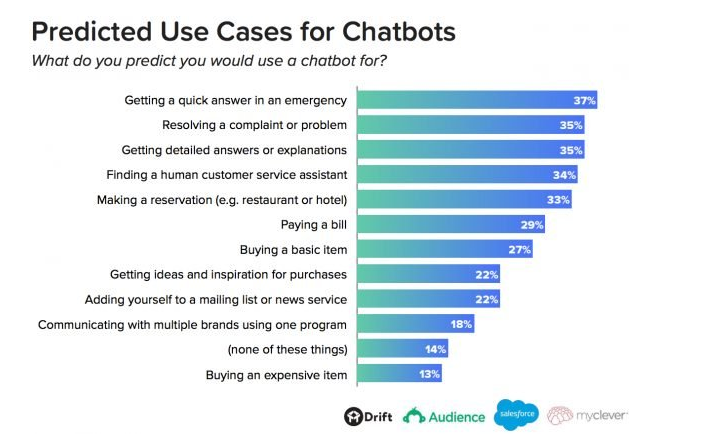
Nobody ever imagined witnessing a system that is set to mimic human conversations in an original manner, thus, providing amusement value to the user interface platforms. Chatbots with Artificial Intelligence reduces acquisition costs, improves ROI, and gives a competitive advantage to a business.

Chatbot Development took a heap due to:

#Hike in the messaging apps

#The augmenting prominence of conversational interfaces

#Propelling growth of AI

#Customer-centric progression

#The spree of Automation

Industry-Wide Scope of an Automated Chatbots


source

Even though we are familiar with the ever-growing applications of machine bots, let’s take a glimpse of a few:

-Chatbots can be integrated into any major chat platform like Facebook Messenger, Slack, Whatsapp, etc. any mobile and web application helping customers.

-Customer engagements would take deep grounds with conversational interfaces like chatbots and virtual assistants.

-Business chatbots offer a convenient and interactive way to connect with customers through the online channel and give them an experience similar to that of chatting with a live agent at any time of the day.

-Scope and scale of chatbots are comparatively high than human teams which helps businesses to connect with more customers in a more efficient way.

-Messaging bots are known to significantly extend the reach of your brand and your customer service teams, thus, strengthening the relationships between customers and businesses.

-Available 24/7/365, chatbots help improve your online presence and allow direct customer participation through all communication channels. 

Regardless of the industry, customers want to feel heard. Chatbots increase the ability of human staff to meet your expectations efficiently and profitably.

[Prefer Reading: “AI-Powered Chatbots: Enhancing Business Communication.”]

Chatbot Development Process, Step By Step

“85% of the customer interactions will be managed by a machine and chatbots will be the most effective way for businesses to differentiate themselves from their competitors.”

#Define Goals

First things first, understand the reason for implementing a chatbot. 

What problems do you want the chatbot to resolve?
What are the manual tasks that a chatbot can handle?
Do you want a chatbot to automate all/partial business tasks?

These are a few questions that must be involved in your SMART goals of developing a robust bot. Your goal must align well with these four major attributes:

  • Ease
  • Importance
  • Time
  • Impact

#Determine the Areas Chatbot can Revolutionize

Chatbot, undoubtedly, is a revolutionary development and to utilize it to the best one needs to analyze and pen down the current time-consuming and routine processes which could come under the prospects of automation. 

Identify the categories which incline towards customer communication and engagements.
(say, customer service, technical support, sales processes, among others)

[Usually, the best areas for chatbots are client-facing processes that are manual and are recurring.] 

One must remember that Customers Expect More!

-Customers expect companies to do more to help them, they don’t want to wait for you to have an agent available and they won’t wait for email responses. They will take their business elsewhere.

-Nearly, 40% of customers cannot find information about a product or service online.

-90% expect companies to provide some form of self-service.

-Billions of dollars are lost by US businesses each year due to poor customer service.

-80% of current customer service operations will not meet the needs of future businesses.

#Sort & Select Channels and Languages

Technology powered bots possess revolutionary potential and offer multidirectional ways of communication where a chatbot sets a real-time example of the same.

In order to keep pace with the latest trends of Customization and Personalization, sort out the communication channels languages you want the chatbot to automate via its complex artificial intelligence and machine learning algorithms. 

Some other considerable factors that swing around the development of the bot include:

  • The volume of customers derived from a particular channel/language
  • Long term chatbot support for the channel/medium/language
  • The volume of customers coming from different mediums, ascending or descending

And your evaluation must be done considering parameters of:

– Ease of automation
– Strategic importance
– Requests volume
– Impact of this process automation

#List the Integrations

Chatbot integrations call for the next step to take over.

Chatbots must serve the business purpose of the development. That is, they have to be able to help and assist human users in the task that has been entrusted to them. For this, it is necessary to ensure that the integration of the conversational agent corresponds to the final objective.

Chatbot integrations to mark:

  • Cloud Storage (OneDrive, Dropbox)
  • CRM (like Salesforce, HubSpot)
  • Payment systems (PayPal, Google Pay)
  • Maps (Google/Apple/Bing maps)
  • Calendar (Google Calendar)

[Prefer Reading: “Enhanced User Experience? Think chatbots.”]

Key Considerations When Building a Chatbot

  • Take advantage of a platform that uses artificial intelligence and natural language processing so that your chatbot understands your customers.
  • If you plan to build a chatbot from scratch, choose a partner with the appropriate programming experience and a proven track record.
  • Look for building a powerful system that enables entity detection to identify, categorize, and analyze words, keywords, and phrases while interacting with a customer.
  • Pay attention and prepare robust algorithms that can handle transactions while securing their authenticity (like password resets, money transfers, etc.)
  • Connect your chatbot with the entire technological stack of your business – CRM, ERP, CMS, and other critical applications for its operation. 
  • Save time working with a provider that has years of experience and understands your needs and those of your customers.

Factors Influencing Development of a Chatbot

Depending on the complexity and design of the application, a chatbot can contain different peculiarities which is further driven by the end goal of the conversational assistant. 

Let’s jot down a few pointers that have a close impact on chatbot development:

#Backend

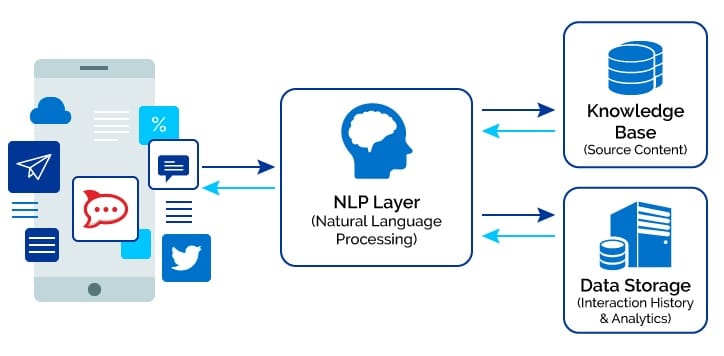
Developing a chatbot needs a study of the necessary backed type that would be the best fit. Choose the one that is powerful enough to bolster and handle different input and output sequences of messages.

The backend has to be able to receive messages through input channels as required and simultaneously be able to analyze texts with NLP(Natural Language Processing)

#Natural Language Processing (NLP)

source

One of the most significant functions of chatbots powered by AI is to achieve the development of a system with NLP. A robust system must be build that is able to connect in the most natural way possible and responds timely with useful data in response to human messages.

[Prefer Reading: “NLP: It’s all About Natural Language Understanding by Machines.”]

#Smart Conversations

This is the most time-taking stage of the entire development process and requires organized, high-end, and efficient work to be done by the developer’s end.

The person in charge of writing the interaction trees has to code the chatbot so that it offers natural responses, simulating (in the best possible way) a conversation that is fluid as if it were another human.

Chatbot a Necessity?

Creating a business chatbot means investing in improving technology, maximizing integrations with various business systems, and designing an engaging and interactive interface for your customers.

All of those things can take time and money that many organizations feel they don’t have. But an investment now means a higher return on potential investment in the medium term. 

If you are looking for developing a custom enterprise software that relates a bot or any virtual assistant, land up to NetSet Software that can help you simplify your complexities in providing interactive user communication with streamlined conversions.

Friday, 30 October 2020

Mobile App Prototyping: Ideate, Refine, Test at an Early Stage


“A Prototype is an integral part of an App Design and User Experience.”

Planning to create an app? Great!

Then you might be surrounded by words and concepts like:
App Idea. App Design. App Navigation. App Features. App Testing…

Wait. 

Did you miss the crucial element, App Prototyping?
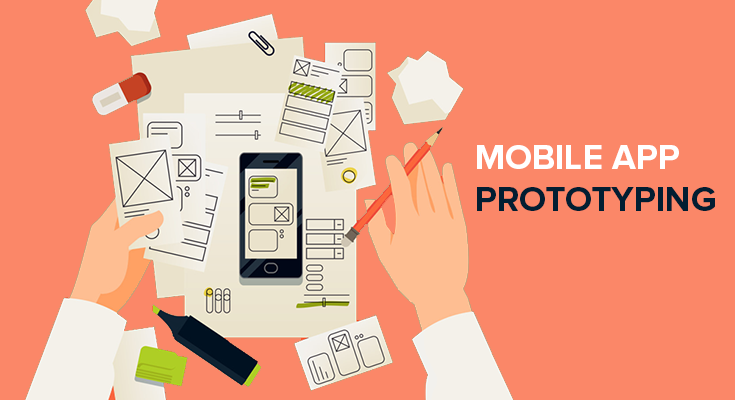
An app’s prototype helps you shape the final designs of the App Idea before entering the Development phase.

If your business is pressing concerns upon deriving enhanced user experience via mobile apps, rapid app prototyping is an unavoidable part of the app development and plays a central role in making it a perfect and an ideal one.

source

A Prototype?
Is an experiment done on a proposed solution to test and validate the ideas or assumptions or other conceptualization aspects cheaply and promptly to devise real-time feasibility?

App Prototyping?
Is the simplest technique to preview an application in its raw form, with attributes concerned with the most basic features like the look, design, elementary traits, functionality, color, etc. without the need to step into programming.

Rapid Prototyping?
Is a process of developing a full-scale, high-level schema or a detailed paradigm of a product as fast as possible which may involve 3D product models as per their feasibility. 

Why App Prototyping?
Can you imagine building an airplane without developing its reference visual model, priorly?

Likewise, it’s impossible to initiate or plan a project’s workings without constructing and concreting a roadmap of prototyping an application.

[Prefer Reading: “Top 10 Trends that Define the Future of Mobile Applications in 2020 & Beyond”]

Mobile App Prototyping: Advantages at their Best

“A Mobile App Prototype allows us to test and validate ideas quickly, thus, improving the overall app concept in an equally timely manner.” 

In all digital projects it is necessary (or would be highly recommended) to have a prototype, since these allow to experiment and turn a desire or a need into something tangible. In mobile app development, it has a supreme roleplay in building and creating the best of the app idea.

source

How mobile app prototypes Fine-Tune the Application?

#Enhance App’s UI/UX

Prototyping helps shape customer requirements and user needs. Given that after the implementation of UX research techniques and the creation of the information architecture, it is possible to develop a more or less realistic version of the digital product in question.

#Interpersonal Communication

Creating an app prototype allows us to build digital products with certain fidelity, depending on the prototype, and it serves as a means of communication between departments or tech personnel involved in the same project.

#Far-Sighted Insights

Usually, prototypes are very useful for development teams since they allow a visual understanding of the project and its magnitude, helping to explore other options and allowing them to overcome problems in the future.

#Project Estimation

Likewise, they allow a better estimate of the time necessary for development taking into account all the functionalities involved in the project and also the visual design of the project.

#Truncate Unexpected Work

Making an app prototype saves loads of time and work and further eliminates the possibilities of rework, allowing designers and technicians to analyze closely the app infrastructure and functionality and whether it’s necessary to optimize its design, appearance, and usability.

The prototypes, in addition to being very useful for all the members of the project, save a lot of time spent preparing functional documents or holding long meetings. Since its elaboration specifies the functionalities in a timely manner and allows the validations of the functionalities to be easier.

#Mutual Client-Company Benefits

Furthermore, the dedicated advantage of investing in a prototype is that it adds value to all project stakeholders, both the client, the technical team, and the design group, thereby,  keeping everyone aligned and facilitating collaborative decision making.

[Prefer Reading: X-Purpose Ready to Use Online Delivery Mobile App [Grocery, Food, Pharmacy, And More]

The Realm of Prototyping

In the same way, as the end-users are the true protagonists of the UX research phase, the client must be an active participant in the prototyping phase. 

And as we proceed forward, it becomes significant to demonstrate, make presentations, explain functionalities, and basic features of the digital product to the target audience or the customers.

In parallel, it is also important that clients have the possibility of interacting with the prototypes themselves, once the presentation and doubts have been resolved. For this reason, it is vitally important that prototyping tools allow not only the easy sharing of prototypes but also generate a real sense of the final behavior of users.

source

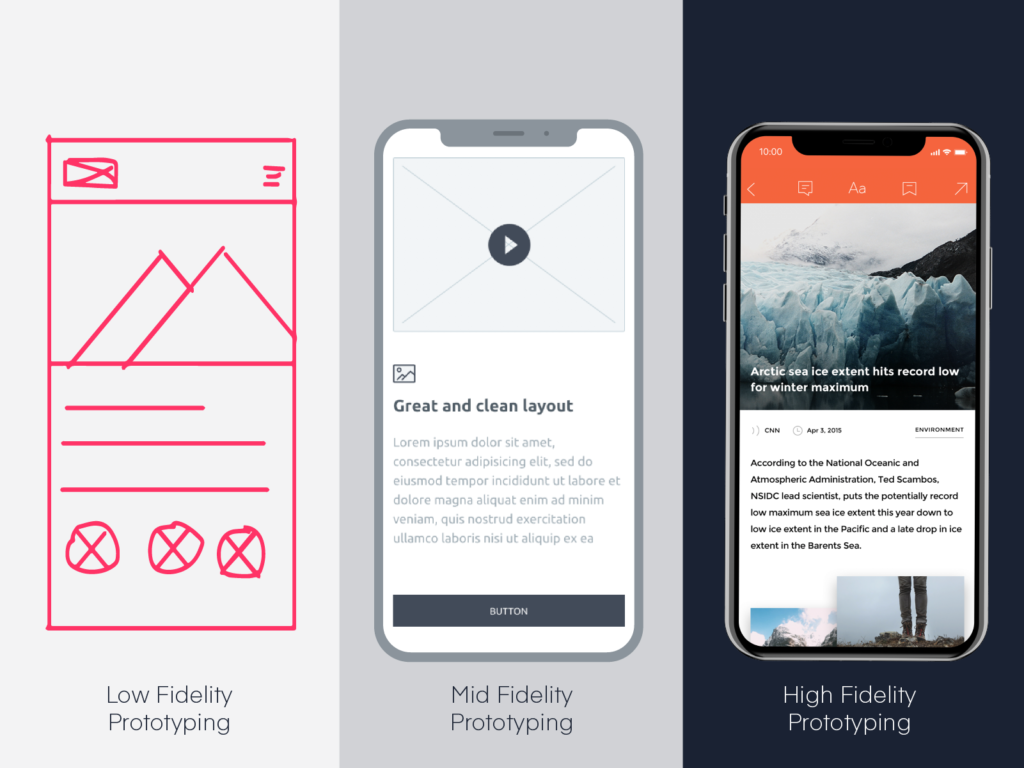
For this, it is advisable to include interactions related to the main actions or navigation of the tool in the prototypes. However, depending on the project requirements, low, medium or high-fidelity wire-frames can be created which require more or less dedication and time. 

The classification can be defined as:

#Low Fidelity

When an idea or draft is digitized with hands without including too much detail.
It’s less elaborated and focuses on representing less functionality rather than UI.

#Medium Loyalty

When product information, content, and some basic interactions are taken into account.
It generally focuses on visualizing app content and a few static/dynamic features.

#High Fidelity

When not only content is prioritized, but animations, visual design, and micro-interactions are also valued.

These are more detailed and interactive and show close resemblance with the final product and used to test the app’s usability to refine user experience at its best.

[Prefer Reading: “Growth Hacking: A One-Stop Solution for Rapid Business Expansion.”]

Why we need to Prototype?

Infinite Possibilities. Foreshorten Development Time. Awe-Inspiring User Experience.

Don’t start the house with the roof!
You must have a well-defined sketch or blueprint ready before you start programming a single line of code and this is the core principle followed by NetSet professionals while they are at work.

Early Research doesn’t Accommodate Everything

The early stages of collecting data and information form the foundation of the project’s success yet doesn’t inform everything that is needed to build an optimal solution. 

Well-done research and analysis, gathering significant data or ideation sessions can simply streamline the process, but verifying and validating that exceptional idea through testing is mandatory.

Prototyping reveals great assumptions and biases towards the app idea and can help in unfolding insights about its practical implementations and its impact on user experience. One can also explore problem areas in interfaces, products.services using prototyping as a form of research and eliminate ill-defined or unknown issues.

To Define, Ideate & Test

Prototyping enables you to explore alternative solutions. Whether you are defining, ideating, or even testing, you can get enormous possibilities to iterate or modify the initial idea based on real-time implementation. 

Thinking by doing and doing by thinking both runs in parallel in the prototyping phase and helps in deriving value from the actual purpose of app prototyping. 

  • Exploring and Experimenting
  • Understanding and Learning
  • Engaging, Testing, and Experiencing
  • Inspiring and Motivating

So, Why not Take the Road to Digital Rapid Prototyping?

Once you have the prototype validated, the hard work begins!
You can then get down to the development of the mobile application which will be aligned with the track of success. 

The rapid app prototyping model act as an ideal model to eliminate the loopholes of an app idea and helps represent a real picture of an app before its final build without robbing much of your time.

Still, looking for someone to take care of bringing a prototype to life?
End your search at 24Hours Rapid Prototyping where a prototype is built for enhanced conceptualization.

First Try It, then Build It!

Thursday, 22 October 2020

Blockchain Empowering Mobile Security


“Each technology has its Pioneers!”

Technical advancements can hardly be stopped and in the near future, technology will become more and more powerful and useful for our everyday life, undoubtedly. Businesses today, irrespective of the niche, strive to offer no less than revolution.

Gone are the days when Blockchain used to better resonate with Bitcoin and Cryptocurrencies and here it is making breakthrough ventures and is steadily expanding its reach in the unconventional boundaries.

The Mobile Development Industry sees no exception!

We all know the pool of diversification that the Blockchain technology offers to enterprises and are aware of its real-life applications being implemented in distinct spheres of work.

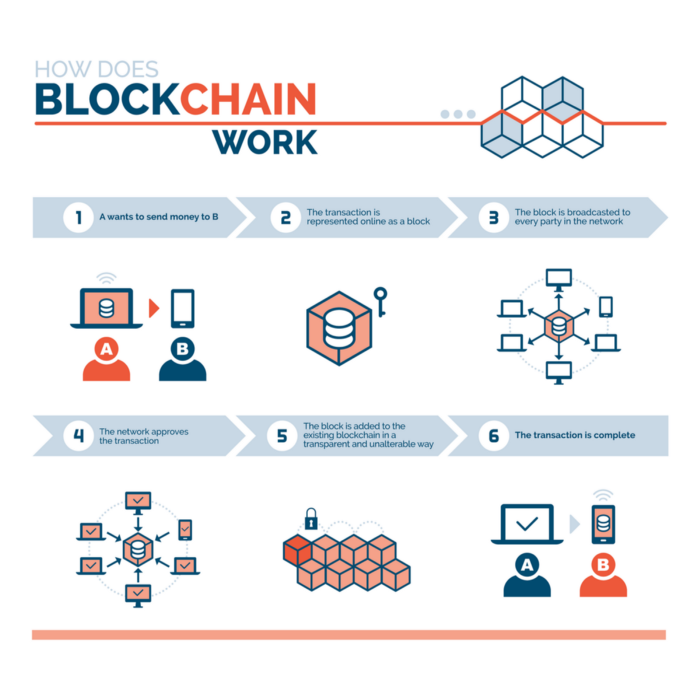
Blockchain:
Known as the technology behind cryptocurrencies, keeps a record of everything that is happening and includes a verification algorithm to ensure the reliability of the information. 

This is the simplest form that can define this robust technology.

Next, when the talk transitions towards mobile security with blockchain, many companies using blockchain consider it as an inevitable need for security systems to incorporate blockchain solutions to counter mobile security threats.

It’s all about Data Storage and Security! 

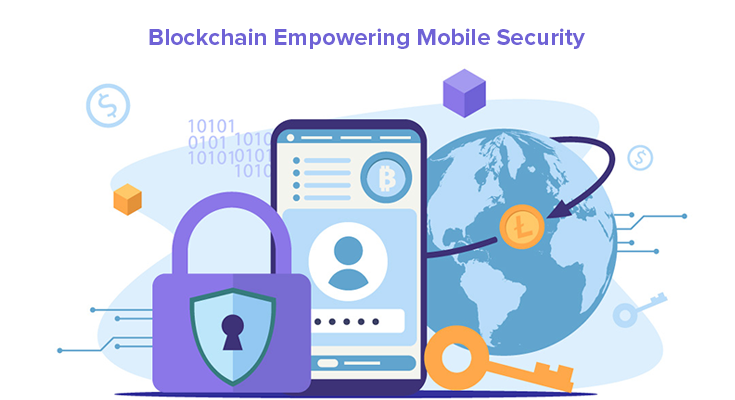
The integration of Blockchain in smartphones and mobile applications is expected to take a step closer to mobile security, thereby, eliminating the need to use third-party applications. 

Certainly, sufficient security measures need to be ensured to secure the entire value chain when interacting with a blockchain platform. 

source

Mobile Security with Blockchain

People rarely know the actual benefits of blockchain in the context of security and believe that relying on anti-viruses, a smartphone, or an e-device can be protected against data threats. Nevertheless, it isn’t that feasible as it seems.

“A third-party software is not worthy enough to tackle a smartphone’s security ambiguities and authenticity clauses.”

Adding transparency to the use and access of data, blockchain offers secure financial scope and can be well engaged to some other security aspects which help to make a blockchain-powered mobile app more reliable and steady.

They are:

  • Identity verification
  • User-centric surveys
  • DNS/PKI
  • Process authorization (like in supply chains)
  • Record Tracking (healthcare & real estate)

[Prefer Reading: “Top 10 Trends that Define the Future of Mobile Applications in 2020 & Beyond.”]

Blockchain’s Defining Properties

source

The newest bet technology has some properties that give dimension to the potential it has and what it can expand in the distinct business categories.

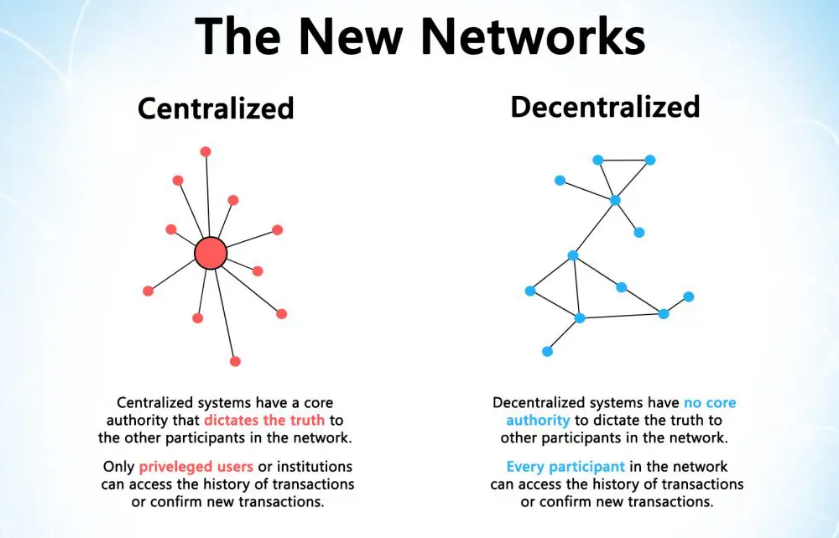
#Distributed Trust
Blockchain network is not governed by anybody, but al nodes participate in consensus for its appropriate functioning.

#Informaton Replication
Blockchain can be assimilated to a distributed and protected database in which all participants have the information so that if someone loses it, it remains.

#Transparency
The information being shared with all the nodes is transparent about everything that happens in the network, allowing a total audit.

Anyone who tries to tamper with the data can be tracked and located easily.

#Security
As it is based on cryptographic primitives, the information is unalterable and the authorship and time of any operation is that has been carried out on the network can also be traced.

#Data Immutability
Once the information has been entered, it is not possible to modify it by any member of the network, as it becomes immutable.

Blockchain’s Roleplay

Not every mobile application would see blockchain as an ideal security solution as it the aspect and motive of building the application totally proportionate to this idea.

Say, a mobile app dealing with cryptocurrencies can make the best use of the technology, however, not necessarily every online app embedding the functionality of money transactions can rope into the blockchain.

Blockchain technology gained huge popularity as a major tech disrupter but many times in specific industry spheres it witnessed a fallen faith due to the massive hype and irrational exuberance driven largely over the Bitcoin concept.

Source

Besides this, many businesses had a great focus on developing and utilizing this robust technology to solve real business problems, thereby, rendering value to the end-customer. The blockchain serves the mobile app development industry as a pragmatic solution and adds advantages defined and perceived.

Let’s become familiar with some crucial factors that must be considered before Blockchain is used as a protective layer for your mobile application.

#Diverse Platforms, Secured & Decentralized

A decentralized platform offered by blockchain acts as safe for storing crucial information and prevents data loss and threats. Certainly, decentralization on diverse platforms prevents cyber attacks on mobile phones and is a long-term strategy to build power-pack resistance for accessing information by unauthenticated users.

The environment offered by blockchain development empowers app development by enabling users to gain complete control over the domain records which further makes it impossible for anyone to interfere with user entries.

#Security Features

Keeping user data safe and secure and knowing that the data will not be breached gives an upper hand to blockchain development. 

This technological advancement maintains data transparency and protection in the mobile platforms as everything is made public and every data entered is made sort of general knowledge.

#Identity Protection

With blockchain, one can be assured that there is relatively nothing to hide. Anyone can anytime view data fed to the block but not everyone can alter it. This major trait becomes the reason for fo its tremendous adoption to enhance mobile app security.

Additionally, when the work is to be done on a decentralized database, assigning private key encryptions to users makes modification, hacking, and misuse of information almost impossible.

#No Password Requirements

Protecting mobile phones and applications with robust complex passwords is an obvious scene commonly witnessed amongst all of us. But applying the best-secured passwords hasn’t stopped hackers from a data breach.

This is when developers look upon efficient blockchain service solutions via mobile app development to get rid of hefty passwords offering security with SSL certificates where transactions are accompanied through a distributed network that ensures outright transparency. 

[Prefer Reading: “Blockchain: What it Holds for Businesses Today?”]

Blockchain Well Applied in Distinct Spaces

source

Although Blockchain data management is rigid and powerful, it still needs to mature in order to exploit its full potential keep up the pace with the everyday tech innovations, there are many projects that are applying it in a multitude of fields. 

Some of them are:

-Supply Chain
The logistics industry is one of the best adapted to the application of Blockchain in its processes. An example of them is the Blockchain Food Safety Alliance created by IBM and Walmart in China to ensure safety in the food sector.

-Smart Cities
Smart cities, based mainly on new technologies and the Internet of things (IoT), are a reality. In this sense, Blockchain is increasingly present in these cities of the future.

An example of this is the case of Taipei, in which a mesh of light, humidity, and pollution detection sensors has been deployed that transfer their data to a Blockchain network that will help optimize the city’s processes.

-Mobile Payments
The great relationship between cryptocurrencies and Blockchain technology has made one of the main applications that are already operational in mobile payment. Many cryptocurrency wallets already allow it and it is expected that in the future we will be able to make all kinds of transactions and payments.

-Digital Identity
The Swiss municipality of Zug, in collaboration with two companies, has created an electronic identity system based on Blockchain. Through a mobile app in which your data is entered and validated, the payment of fees, access to municipal services, and in the future electronic voting is allowed.

[Prefer Reading: “How to Use Blockchain in Developing Video Conferencing Apps like Zoom or Google Duo?”]