Thursday, 10 December 2020

How Much An App Costs? Attributes, Estimates & Costs


Believe it or Not!

“A User possessing a Smartphone spends 90% of the Time on Apps!” 

It all starts with an idea, which when practically implemented brings innovation in the lives of people. Today, almost every business type desires to build a mobile application that can help them expand their business reach seamlessly.

But do you know where exactly they fail in their implementing their concept into a reality?

It’s merely a lack of planning and an unorganized project budget.

Thus, it’s imperative to determine the cost that an app incurs as per the business requirements.

How Much May An App Cost You?

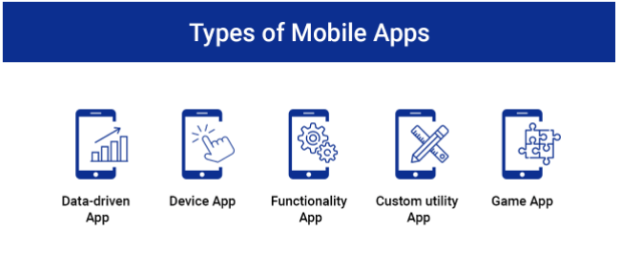
There is a wide price range of building an application and could be closely compared with the price of a car. This is because an app cost varies widely depending upon a number of factors:

App Type, Platforms, Features, Integrations, Functionality & Design, among others.
Available app cost calculators state a price range that might not be affordable for majorly fresh business startups or newly established enterprises and ranges from $267,000 to $360,000 for complex, multi-feature mobile apps.

The array merely showcases the hype of mobile app development in the IT sector. While looking at this NetSet has designed a comprehensive range of App costs depending on the size and complexity of building an enterprise-ready application.

To know more get the estimate of your app cost precisely or schedule a call with the experts that will provide you the best assistance ad recommendations as per your business demands. 

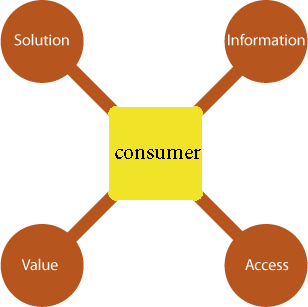
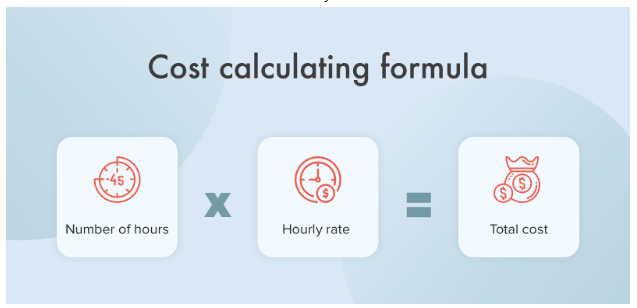
The cost of an app correlates to the number of features added to it and the frequency of the app complexity. These factors form a direct equation with the app development cost irrespective of any business industry. 

The fundamental rule expressed in symbols that give an estimated cost is:

A Quick and fairly Accurate Cost 
Prior to proceeding towards the development phase, we usually provide you with a rough mobile app development cost estimate that projects attributes involving project description, project requirements, delivery, etc.

Our evaluation proceeds by exercising the following two steps:

#1 Create a Rough Cost Estimate
We calculate an approximate cost and give you an idea of the investment you need to develop an app. It’s done before you sign any contracts, within 1-2 days.

#2 Create Exact Cost Estimate
Then we make an accurate estimation supported by the contract that cites the terms and stages of the process and a detailed description of the final result.

[Prefer Reading: “Multi-Experience Evolution: New Experiment in Mobile App Development.”]

Insightful Frequently Asked Questions Highlighting App Development

Here are a few questions that help the development team to build an ideal application that perfectly streamlines with the app requirements. (Many more may be included varying from company to company.)

#What Application Do you want to develop?

Choose the operating system that suits you best according to your audience. If you don’t know which platform your potential customers use the most, we recommend that you choose multiplatform.

#How would you like to design your app to be?

Appearance does matter. An attractive design conveys more confidence and is one of the necessary security elements in any sales process.

#Do you need users to register?

Currently, the preferred form of registration for many companies is through one or more social networks (Facebook, Twitter, Google +). This type of registration is usually faster because it does not require validation.

#Can users create a profile?

Profiles can be very interesting to gather information about the interests of your users. This will allow you to create offers tailored to your needs and increase your sales.

#How will you generate money with your app?

If you accommodate a very active user database, an in-app purchase is the best option.

#Do you need your website and application to share data?

This means that you will have to make an API (or application programming interface) that is the friendliest way to connect between applications or some other custom solution.

#How many languages do you need the application to have?

Having multiple languages ​​available will allow you to reach a larger audience. In some cases, it can make a difference if your competition doesn’t offer this option.

#Do you need an Icon?

An icon allows a brand to differentiate itself quickly and also improves relevance in different marketplaces.

[Prefer Reading: “10 Unforgivable Mobile App Development Basics Mistakes Everyone Makes.”]

Essential Factors Influencing App Development Cost

# Targeted Platform

Whether you wish to go for native or cross-platform, the development time and cost would start getting hefty the more platforms you target at once. 

Make a decision of choosing one out of Android and iOS probably which is most famous in your target geography and think of the other as the next enhancement.

# Count of Features

Features are no less than enhancements for an application. The more you add them to an app, the more time consuming and heavy on cost it becomes.

“The more you delve deeper into personalized app features, the wider is the investment spread.” 

Regular and basic features are easy to include but customization and modification in the general features may indicate price add-ups. It’s wise and recommended to make a list of features to be added version-wise which would help eliminate cost enhancements in the headstart, thereby, releasing the app in corresponding versions.

Next, the crowd-driving feature(s) further ascend the cost as per their complexity where even a single significant feature can be equivalent to ten regular features in the cost comparison.

# No. of Screens

When the idea of the app becomes final after refinement, make sure you have finalized the functionality. Adding unique screens or the ones less required would raise the cost bar, especially the ones which are user-specific and require their intervention.

Unique screens may affect proportionately while determining app cost.

# UI/UX, Animations, Special Effects 

It’s true and proven that today apps are built with a single motive of delivering an amplified user experience, improving the quality of the app. Adding special effects, unique gestures and animations certainly work in fulfilling the motive and is a plus from the marketing point of view as well.

Designing and development are time-stretching phases which extend the cost along with it, especially, with bespoke business requirements. Gaming apps set a good example for the same, however, many other app niches may involve a huge investment of time and money where customization gets involved.

[Prefer Reading: “Can Design-Development Phases be Leveled with Prototypes?”]

# Offline/Online

In a general sense, online applications are more useful and high in demand, nevertheless, this category is the one that derives tremendous development hours and cost.

While the offline apps are static and much ordinary, cheaper, and quicker to build as they aren’t internet-driven and do not exchange data from the internet.

(Embedding modern technologies like firebase can help you be light on the pocket of data-driven apps.)

# Backend Processing

“App Development Cost is majorly influenced by App Design Cost, Frontend Cost, Backend Cost & Server Management Cost.”

Backend is the support of an application. Where some applications require simple backend data processing and storage, others involve backend complexities which surely consume time along with money as per the modern technologies used.

Say, X-purpose mobile apps may seem easy with the frontend, but surprisingly the backend is what eats the cost of development. 

# API Integrations

App login via Google, Facebook, LinkedIn is a common play now but ever analyzed that how much effort it requires to integrate the functioning at frontend and backend both.

Things that appear simple and easy are made so while running various codes and test-runs before they are actually applied. From the frontend appearance to the backend data handling, API integrations take time and cost too.

With the advent of modern APIs brought up by third parties, though the efforts get reduced at some point, the cost correspondingly ladders if the count of third-party integrations gets increasing.

Some of the requisite app third party integrations include:

  • Social media login
  • Payment gateway integration
  • Integration for data sharing
  • Integration with Google maps
  • And much more

[Prefer Reading: “How Much Will it Cost to Develop an Ecommerce Website with its Native App?”]

Secondary Factors that Rollover the App Development Cost

#Time
Depending on the deadlines, the cost may or may not increase. If you need the app before a specific date and the developer does over time, the price will go up a bit.

On the other hand, if you are more flexible and are not in any rush, you can adjust a delivery time and the development cost will be adjusted more.

#Quality:
Think that the more details the app has, the more development work it will need. All the details will end up as you want, but logically the cost will go up if the design requires much more effort.

#Launch costs:
If your application has a B2C model (that is, it is not an internal app) you will have to make sure your users find it. This usually involves an initial investment in marketing to give visibility to the application and to position it well in the app stores using ASO techniques. 

Although this point is not directly related to the development of your application, it is essential that you take it into account.

#Additional costs:
Did you know that uploading an application to the app store has a cost?

In the case of the Play Store, it is a single payment while in the iOS App Store it is an annual payment that you must pay to register as a developer and be able to upload your application.

#Maintenance: 

Your application cannot remain frozen in time. Mobile technology advances very fast with new devices, screen sizes, hardware functionalities…

To make sure that your application remains up to date, and to resolve any bugs that may appear, you will have to continue collaborating with a development team. You can do it with a bag of hours dedicated to this maintenance.

5 Secrets to Reduce Mobile App Development Costs

  • Be Clear with your Business Requirements and App Goals
  • Choose the Right & Reliable Firm (NetSet Software is a genuine recommendation)
  • Monitor App Development on Regular Intervals
  • Prefer to Choose Cross-Platform App Development
  • Opt for Building an MVP (Minimum Viable Product) First 

[Prefer Reading: “Top 10 Trends that Define the Future of Mobile Applications in 2020 & Beyond”]

Wednesday, 2 December 2020

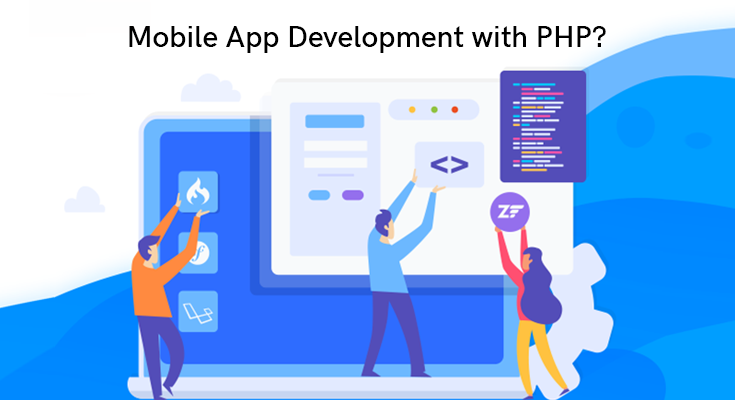
Mobile App Development with PHP?


When we hear about technological advancements, the concepts that first trigger in our mind are that of Artificial Intelligence, Machine Learning, IoT, AR/VR, etc. but we tend to miss the backend languages being modified which actually pave the path for new innovations and worldly inventions.

Think of any modern device and there’s a robust technology behind it. And what’s running behind that technology are the complex languages embedded with algorithms, codes, and vigorous programs.

The world of programming is synonymous with that of the universe which has no end and even if it has somewhere, we can’t see it yet. The craze of learning software development languages and creating some unique inventions is heavily expanding.

Undoubtedly, languages like Python, PHP, Java, .Net, C, C# have gained enormous popularity ever since their inception, say, PHP, invented in 1994 by Rasmus Lerdorf, is the most favored language presently because of its server-side scripting nature.  

PHP is the most favored language for web development and is a frequent choice of developers for the backend of cloud applications as it aids them to develop software/apps comparatively faster than others.

“PHP is the easiest choice for Cloud App Development.”

With all the new languages coming into the market, PHP still remains calm at the center of the storm and is considered a forever young programming language that offers a myriad of advantages.

The technology can be used in most of the areas of IT custom software development with its open-source tools that have ultimately enhanced the scope of the language. Some of its applications include:

  • PHP Websites
  • Web Database Applications
  • Ecommerce Applications
  • PHP Enterprise Software (like CRMs, CMs)
  • Mobile Applications

Do You Know?

78.9% of all websites use PHP as a server-side language.
So one can deduce that 8 out of 10 websites surfed on the Internet use PHP in some way.

WordPress, Wikipedia, Facebook, Yahoo are built with PHP, and surprisingly Drupal and Joomla use it too. 

How PHP Empowers Programmers to Develop Mobile Apps?


Zend’s View of Mobile App

source

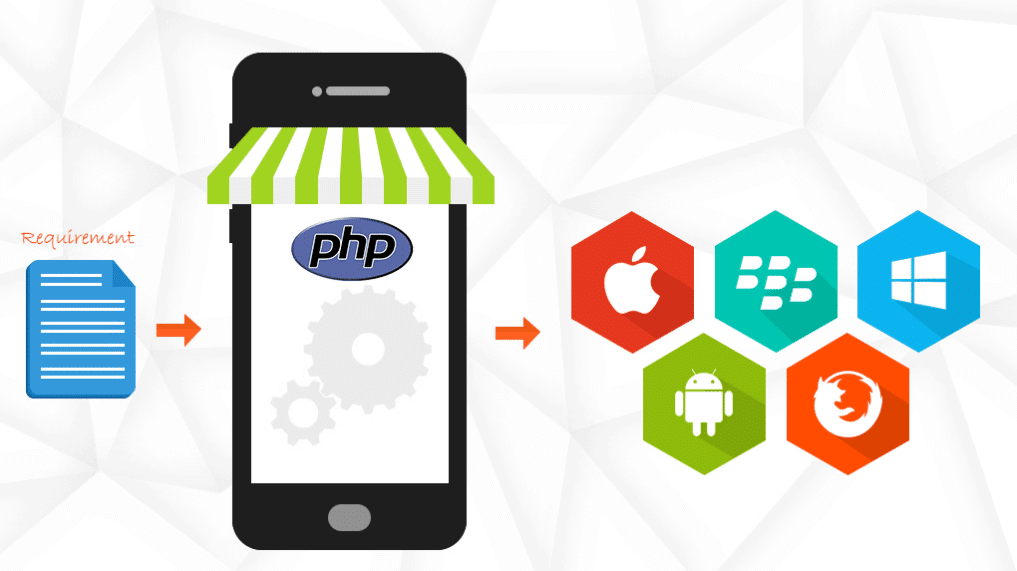
The PHP language has the ability to provide a platform that helps a developer to create an application, test it, and finally deploy it with the help of its free open-source technology that cuts the hard nut and makes it as simple as a cakewalk.

PHP for Mobile App Development Offers Great Advantages

source

-App maintenance of PHP-powered applications is not a hard nut to crack until the market is updated with the latest version.

PHP mobile app development is cost-effective as the PHP tools used are made open-source.

-App deployment is easy which only requires uploading files on the webserver without any hassles.

-As it can be accessed globally free of cost it becomes the preferred choice of many that additionally offers the best development quality

-PHP mobile apps are made compatible to support all types of e-devices, taking care of resolution, screen size, input methods, operating systems, color, etc.

-The language has a secured architecture that serves to be the best choice for web development as well as mobile app development.

[Prefer Reading: “Multi-Experience Evolution: New Experiment in Mobile App Development”]

Zend PHP Framework

For creating distinct types of applications in PHP, Zend becomes the preferred option and is the forerunner PHP platform which is an essential element in mobile app creation. Zend Server and Zend Studio are used as the frontends while developing an application.

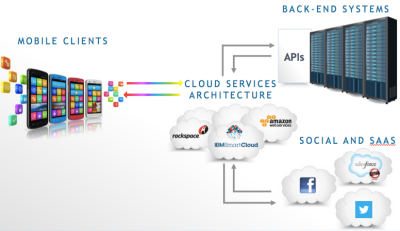
Earlier it was tough to build apps in PHP as iPhone and Ipad were encoded in Objective-C and Android was coded in Java. Nevertheless with Zend Framework PHP developers can build the backend and the interface at the same time. (create the front-end with a WYSIWYG interface builder, and connect it all on the backend.)

source

The task of building applications with many different services (like CRM systems, Cloud services, or social networks) at different places can be devised as a complicated task, however, with Zend, this complexity gets eradicated while connecting the entire backend and interface simultaneously.

Benefits to Reap Out of Zend

Zend framework offers great flexibility to the developers where they can code and build intuitive and usable custom mobile applications satisfying the business needs.

-Cloud service authentication
-Zend 10 offers usable drag/drop functionality
-Offers best in-app advertising techniques
-Provides easy filtering techniques for enhanced web development
-Uses custom HTML5 and jQuery for mobile outputs (suits enterprise needs)
-Supreme Apache Cordova for device accessing
-Zend Server Gateway provides necessary techniques for programming

What More You Can Accomplish with PHP?

  • Write your own script code
  • Use Ming library
  • Integrate Cloud technology to the website
  • Image processing and generations
  • Create Instagram like filters for images
  • Integrate AMP (Accelerated Mobile Page)
  • Add Cyber Security to website
  • And much more…

[Prefer Reading: “10 Unforgivable Mobile App Development Basics Mistakes Everyone Makes”]

Thursday, 26 November 2020

B2Me: Marketing where Brands Get More Personal


Each business category we can think of today was not the same if looked upon it years back. Isn’t it? Businesses have a unique tendency to be dynamic as their traits are always changing and this ensures that they can never fit into neat molds.

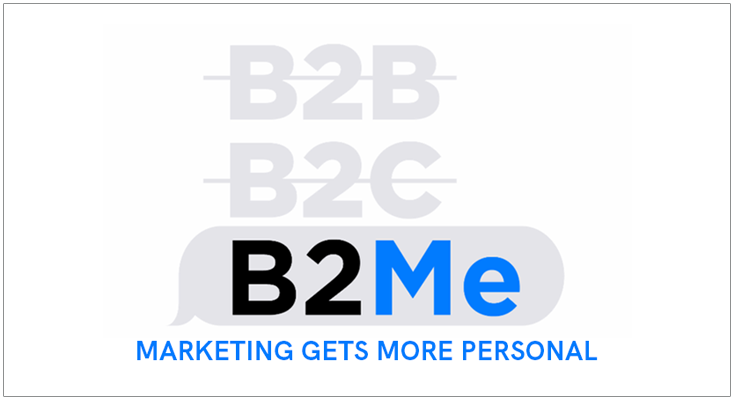
As technology makes transitions, trends in different business sectors take a new shape which results in concreting overarching strategies. Earlier the enterprises were more involved with two basic business models, B2B (Businesses to do business with other companies) and B2C (Businesses sell to the end customer) but now, they have made an inclination towards ‘B2Me’.

Before we delve into knowing what id B2Me Marketing, the first thing to get familiar with is that it is not a new concept. It made its advent a few years ago but has now gained traction as almost every business is implementing it as a core business strategy.

B2ME

Simply put, B2Me is a concept of marketing (Business) and delivering to an individual (‘Me’) concerning his demands and desires. Majorly the B2Me is all about concentrating on ‘Me’, the individual consumer.

source

B2Me crosses the level of marketing in terms of customer engagement. It builds a relationship between a brand and a consumer and continues to nurture it by learning more about them, their needs, buying patterns, and much more.

“It’s not about closing a sale, it’s about developing a bond with a single unique individual that lasts longer.”

This is a great approach that focuses on developing relationships where the client/customer feels heard and personally serviced that certainly intends to create loyalty and earn a vote of trust. This method is much more efficient and is likely to have a substantial impact on customer acquisition costs, thereby, increasing the purchasing frequency.

source

B2B/C and B2Me all are targeted marketing techniques where B2Me is a more pulling strategy in this digital world. If anybody says that we haven’t been doing this for years, then wait, get your head turned to the flashback when you first realized that how Google analyzed your search history and displayed the most relevant results to ‘YOU’ (Me).

B2Me has a great scope amidst the much larger market of personalization where the consumer of today expects brands and companies to tailor products customized to their interests, tastes, needs, and individual pain points.

Characteristics of B2Me Marketing

  • Each potential customer is treated as a specific person, not as part of a target or demographic segment.
  • The relationship between the brand and the consumer is based on the tastes of the latter, as an individual.
  • Understand the situation of the buyer at the time of their interaction, since the intention of the company is not to offer something but to solve a specific problem.
  • Develop new techniques of value and interaction, based on daily learning.
  • It adapts to the context of any brand or consumer.

[Prefer Reading: Neuromarketing: Understand Consumer Reactions by a Mix of Cognitive Science + Marketing”]

What Businesses Need to Learn from B2Me?

source

Without any traces of doubt, we can rightfully say that B2Me is monogamous marketing which has over shined traditional business paradigms.

In this digital age, businesses need to understand,

“Brand Loyalty becomes indestructible when a customer has built an airtight emotional connect with a brand and knows how to align their efforts with the customer’s inner vision.”

Let’s talk about Apple and its excessively costly iPhones. 

Why is it that even after getting the same quality and functionality in other brands people opt for iPhones? Even after knowing they tend to get obsolete faster than others with the emergence of new versions.

It’s what they implement B2Me, where customers refuse to cheat on the brand as the brand cares for them by knowing their intent closely at each step. 

“Listen, Empathize, and Solve Problems with a Custodial Solution in Hand.”

Some more brands to add would be:

  • BMW
  • Coca-Cola
  • Harley Davidson
  • Amazon Prime
  • Nike
  • Oprah

And the list goes on. 

Ad feeds and pushy campaigns do not work as much as expected at the present time. The need is to customize, personalize, and market intelligently, leveraging the digital media especially which ultimately feeds the B2Me movement.

B2Me Empowers the Data-Driven Culture

“Tomorrow’s market leaders will be companies that accept the efforts of consumers to shape their own brand experiences.”

-Laura Gurski

So True!

B2Me is all about delivering a personalized customer experience and to achieve this a brand needs to be close to its customers to know their wishes and wants. And of course, nobody can go door to door to gather customer information.

This where data collection plays a significant role in making business decisions to achieve accuracy that further helps to scale in building those relationships. 

“Data-Driven Marketing is a common recurring trait seen across successful brands.”

B2Me becomes robust and powerful with the support of relevant data. Let’s see how Maybelline, a New York brand, raised its sales using a customer-centric approach of marketing. 

We know how strenuous it is to drive people’s eyeballs towards your brand, product, or service. To do something apart from the normal, Maybelline took the B2Me approach by running a 3 step campaign called MyMNY which got customers to characterize themselves in three steps and rendered a personalized beauty guide to them.

The technique was different that offered—

Users:

-A non-generic product brochure
-A new purchasing perspective
-Personalized suggestions, tips, and ideas
-A feeling of brand empathy
-Product purchase coupon

Maybelline:

-Huge volume of organic traffic
-Valuable user data
-Hiked coupon redemption rates
-Multiplied  sales and ROI

Well, this was a perfect example of B2Me and data collection in an intelligent way which helped the brand to start gathering trends and future product ideas in real-time. 

If seen today, one can identify multiple such examples of businesses applying customer-centric marketing on distinct social platforms. 

[Prefer Watching a Mark Morin Video on B2Me which pivots the hammer on how to Get Personal, Get Relevant, and Get Customers.]

So are you Geared Up to Perform B2Me?

B2Me forms its basis on the premise that no two Customers are like and therefore companies have to adapt solutions to each of them and achieve a more favorable response from them. 

The footprint that digital consumers leave with each of their daily inquiries and interactions becomes extremely valuable information for companies, as this data helps them understand the behavior of potential customers. 

Establishing a B2Me relationship, by individualizing the attention of each customer, allows brands to create a personal and authentic connection with them.

[Prefer Reading: Trends Shaping Digital Customer Experience.”]

Wednesday, 18 November 2020

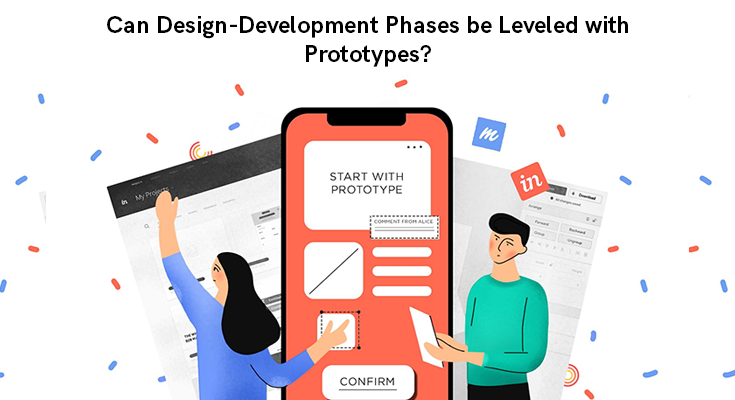
Can Design-Development Phases be Leveled with Prototypes?


Thinking of a big idea and wishing to make it a reality looks so easy on the eyes; entrepreneurs and wantrepreneurs do it almost every day. Nevertheless, the practical implementation involved to shape and build that reality takes a lot of effort and contributions.

Developing an application or a website certainly includes a lot of billable hours consumed by developers, designers, and UX professionals. 

What if there was a way to cut short these hours?
What if there was a probability to improve the app design beforehand?
What if we could validate its necessary features before actually building it?

Prototyping eradicates all the ‘What Ifs’ and turn these probabilities into practical possibilities. 

Prototyping validates the First Step of Project Success.”

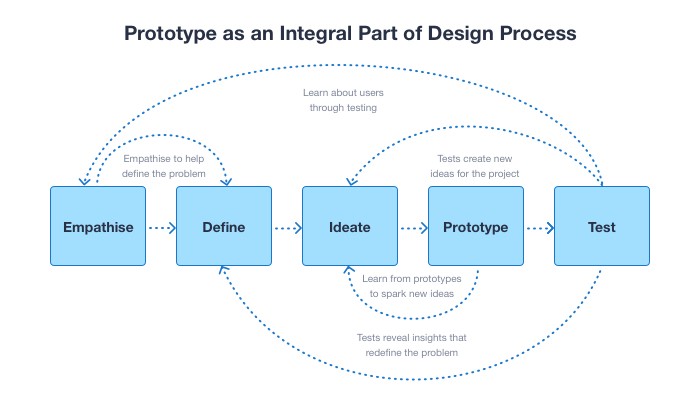
Prototyping is a phenomenon built to ease the efforts involved in designing and further development, by identifying and formulating the main direction of these processes. Designing a product goes through several stages and an ideal approach to evaluate its feasibility is implementing rapid app prototyping.

A Prototype is a similar dynamic or working model that is tested and verified with a sample of typical users.

Users play a crucial role in providing feedback as they put light on the areas of focus which on further iterations and improvements gets the final shape that is aesthetically pleasing, intuitive, and as intended.

Need for a Prototype?

source

To proceed with the successful launch of a prototype, one must invest time in building prototypes to reap extensive advantages while streamlining the design-development processes.

#Enhance App Quality
The presence of a prototype ensures the appropriate degree of acuteness and correctness of developing a web or a mobile application. One can check its navigation, functionality, state of dynamicity, conduct usability testing, and allows to make quick edits before its actual creation.

#Analyze Technical Feasibility
The dynamic paradigms of an idea, formally prototypes, help to analyze the scope and feasibility of the project and identifies the facets which can prove to be a hurdle in actual implementation.

It can further help to spotlight physical, technical, or even financial limitations.

#Risk Reduction
Prototypes directly proportionate crucial process components that are time, budget, and resources. On exercising the prototyping phase many upheavals, functional loopholes, hidden shortcomings get exposed which make it easy for design-development to proceed smoothly.

And it is evident that the risks of projects including prototyping are much lower than the projects that miss out on the prototyping phase before stepping into designing and development.

#Iterate at a Low Cost
As prototyping consists of gathering user/customer views and feedback, it clearly makes it obvious to reconstruct the code and iterate to achieve the best at this stage. The process continues until the conception of an optimal product is achieved.

This act certainly cuts the extra cost and time utilized in the programming phase, where creating several product prototypes is recommended in case of mass production.

#Derive Dedicated Feedback
Many heads, many minds. Each person experimenting with a prototype would have his own vision of the app or product to be made final.

Thus, this prototype exposure enables experts to unify all ideas and analyze the appt from a different perspective, making its ideal form.

#Portray Idea More Clearly
A working dummy of your project idea can help you render information to potential customers more precisely and in a concrete way. This enhances the prospects of finalizing a deal, considerably, possessing an asset in hand which needs fewer alterations.

Furthermore, a well-designed creative prototype can help you better prepare your marketing communication and initiate your pre-sales.

[Prefer Reading: “Latest Trends in Web App Development Dominating 2020 & Beyond”]

A Road-map to App Prototyping Process 

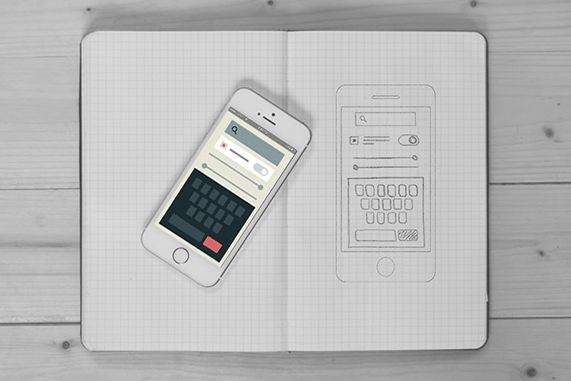
One can build several scaled-down versions of a product which can be as easy as a paper sketch or as complex as a hard-coded version of a functioning app. But there is a general process that leads to creating App Prototypes be it easy or complex.

source

#Understand the Format
First things first, there is a need to analyze the market and set standards to build your strategy. Think of a feasible app idea and focus on its future vision.

Make a checklist of the technologies your app needs to embed and the ones which are available and sort them accordingly as per the scope and budget. Setting up a plan will help you proceed in a streamlined way.

#Determine App Requirements & Scope
Getting an idea is a half story, to complete it, you need to predict its success by looking at the issues it may arise from the user’s perspective. It’s the kind of idea testing you do at your end.

At your level, you may run a hit and trial method asking potential customers to express their expectations from the app which would let you know their intent whether they even need it or not.

#Perform in-depth R&D
This again is a crucial step that needs attention. You must be very proficient while researching the app idea. Make sure that your product must answer the problem statement and solve issues.

Next, dig deep and mark a point on all the competitors and their products and know, how they are different, and compare how your app is going to excel those already present in the market.

This ground-up will help you define the USP (unique selling points) and eliminate potential hurdles coming your way.

#Develop a Prototype
Pen paper sketches are old school now, so try building a prototype with a tool and create a basic version of the idea. The features and functionality added in the prototype are directly influenced by its preset goal.

The areas of focus here are 

  • Adding high-impact obligatory features 
  • Removing potential complexities
  • Focusing on delivering a next-level user experience

#Test & Review
Give a test run to your invention, identify the loopholes, pain points, and also the highlights of the prototype. Testing can be beneficial in driving customer engagement at an early stage by validating it from the people and asking their opinion which will prove advantageous in eradicating the blockers of your app’s success.

#Revamp & Improve
The gathered information in the form of feedback can be well utilized to iterate, make changes, and improve the efficiency of the prototype, and further the entire application. Tweaks and modifications are easy to make at the prototyping phase which hardly impacts any other step. 

Once alterations are done, test it again and make sure not to leave any flaws this time. 

#Repeat
The process might return to the first step if any major segment is missed/skipped or any unknowns remain. The process may also go on repeat if additional testing is required or any extra feature/functionality needs to be added for product enhancement.

[Prefer Reading: “Top 10 Trends that Define the Future of Mobile Applications in 2020 & Beyond”]
Prototyping is essential if you want to test your ideas at an initial state and find new solutions before engaging in the lengthy process of software development. Nobody can afford to keep on designing and coding over and over again and waste resources and time, altering even minor things.

With prototyping, time and money constraints get relaxed where one can try out crazy ideas to turn them into reality after validating and verifying the real use cases.

Wednesday, 11 November 2020

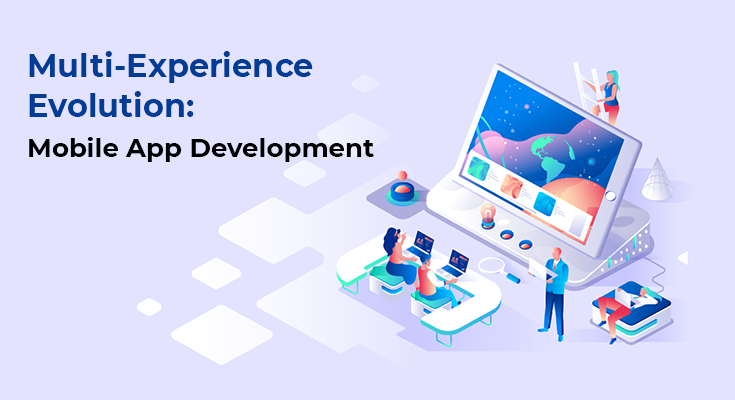
Multi-Experience Evolution: New Experiment in Mobile App Development


Today’s competitive market revolves around delivering the best to the users and this has led brands to prioritize modernization at the utmost level. Every business today tends to expand its value propositions by reaching beyond the boundaries of web and mobile app development to meet exceptional user and industry demands. 

A Universal Fact
The level of user experience delivered to the end-user decides the perception of the brand. 

It’s certainly true that no brand today can afford to take up the blame for a bad user experience as even a single accusing action can destroy the high earned image. Web browsers, despite being the most common touchpoint, takes a back seat when compared with the apps developed for an immersive range of e-devices like smartphones, smartwatch, virtual assistants, etc.

Among all different types of applications built, mobile applications have gained all the hype which urges the mobile app development to necessarily get mature and expand its modalities.

Multi-Experience is all the need!

Gartner says,

“Multi-Experience directly proportionates the Future of App Development.”

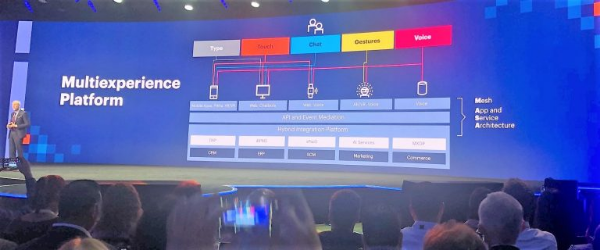
Multi-Experience Development has evolved to focus on valuable use cases, which go beyond a mobile device and an application, thus, supporting the design and creation of integrated, personalized, and environmental experiences that span multiple digital touchpoints.

source

Multi-Experience refers to the various permutations of modalities (like touch, voice, and gesture), devices, and apps that users interact with their digital journey across the various touchpoints.

It’s a technique that brands must consider as a strategy that can bring great unexpected opportunities and drive new innovations and significant changes in the digital world. 

By having a clear knowledge of the customers/consumers and knowing their intent, it can lead enterprises to a multisensory and multimodal consumer experience.

[Prefer Reading: “Mobile App Prototyping: Ideate, Refine, Test at an Early Stage”]

Is there a Better Future for Mobile Applications with Multiexperience?


Source

Developers of mobile applications increasingly launch new value propositions for apps where consumers not only have a unique experience.

The report generated by Gartner states that the apps that they will generate in the future such as wearables, voice, and Augmented Reality will be one of the options that will triumph in the long term, being the attraction phenomenon worldwide at that time.

Traceability of these apps will continue to be carried out both in the present and in the future, according to the indicators that have been carried out with the users, these technological tools will be the key basis to facilitate the day-to-day business chores.

[Prefer Reading: “Top 10 Trends that Define the Future of Mobile Applications in 2020 & Beyond”]
What Uncommon Features be Common in the Futuristic Apps?

#AR and VR

Augmented Reality and Virtual Reality will remarkably transform the future of apps as well as companies of different niche and industry, especially well-known segments of games, entertainment, social media, healthcare, and more.

#Multiscreen

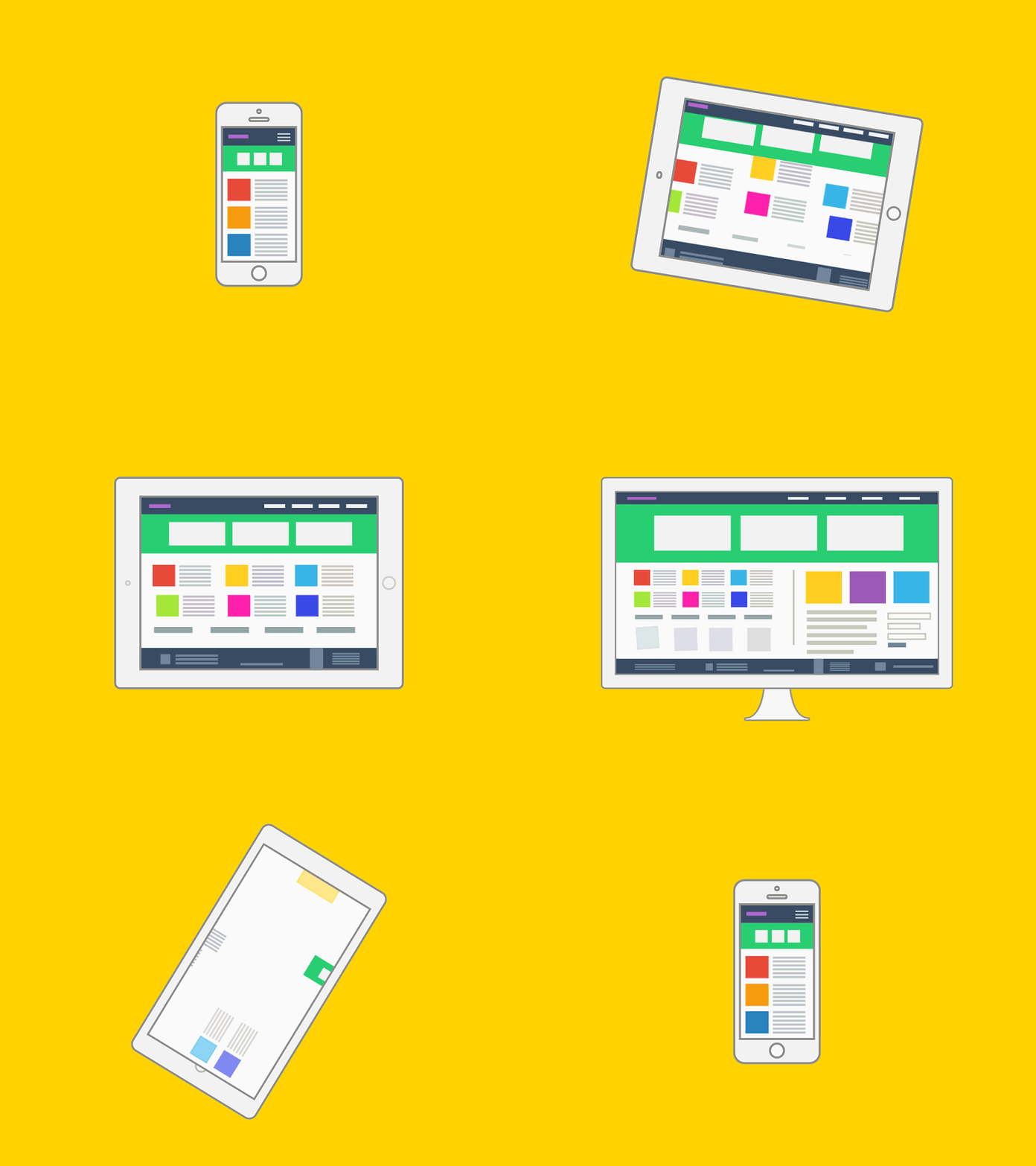
Tablets, iPods, smartphones whose largest screen range between 4.7 to 5.5, offer a wide range of on-screen options. The next-gen applications would be capable of adapting to any screen size with Internet connectivity, be it any smartwatch, projection screen, smartphone, etc.

#Sensors

The use of sensors would be a common play that would be used to collect all forms of data and information to keep the user more aware and informed of the surroundings as well as their own self.

Say, a vehicle would be able to detect that there is danger before can even make out or see it or any heath application would be able to control the disease. Such applications exist scarcely but would be a familiar task of everyday life.

#M-Wallets

The rends of mobile wallets will continue to grow. 

[Prefer Reading: “Survival of the Digitalist: Technology Driven Customer Experience”]

Technologies Used

Visual, voice, and touch interfaces are pre-established and much needed for B2C applications.

However, with the rise of conversational user interfaces, questions are raised upon the technologies being used in Multi-Experience Development. Cloud-hosted Artificial Intelligence is widely used that supports MXDP which will leverage image and voice recognition to the next level.

Further, Augmented Reality, Virtual Reality, IoT will be looked upon for developing multi-experience applications which can interact in a more efficient and human way, supported with distinct electronic devices. 

Multi-Experience Development will have a great impact on the development industry and will provide reliability, speed, agility, and enhanced user experience. 

Leading Multi-Experience Development Platforms to Look Upon

Here are a few selected choices that support the intent of MXDP:

-IBM
-GeneXus
-Appian
-Microsoft
-Mendix
-Kony
-Oracle
-Outsystems
-SAP
-Salesforce
-Pega
-Progress
-ServiceNow

source

Final Consideration

Users have normalized the use of apps in their daily life through different devices and platforms. For further ameliorations, in addition to solving the needs of users is focused on offering new multi-experiences.

Multi-Experience is A new way of relating the world and technology, unifying them and expanding the interaction between them.

This type of technology is a great help for most companies where they seek to eliminate obstacles in the service of their clients. They make them live an experience through devices that have alternate realities as virtual reality allows us.

Do you Want to Develop an Idle App for the Future?

NetSet is a top leading IT company in rendering digital product development solutions and specialize in providing consultation and advice on the appropriate technologies to use for pumping your app/product ideas to become the reality of the future.

Our adroit professionals deal with Digital Product DevelopmentCustomized Mobile & Web Apps, and Professional Services and can help you initiate your project with cent percent success prospects.