Wednesday, 20 January 2021

Mobile App Personalization: An Opportunity for Business Disruption


The digital world is all about bringing innovation via buzzing ideas, technical advancements, immersive applications, smart tools and devices, and more in order to make a successful world where greatness and uniqueness are normal.

Following a multidisciplinary approach, businesses today intend to deliver quality services without making any compromises to achieve enhanced customer experience (CX).

Do you know that our globe accommodates 2.2 million smartphone users where all together 37.8 billion apps were downloaded in the second quarter of 2020? 

With great statistics upfront, businesses need to realize that there is a massive opportunity to empower users, leverage customer experience, strengthen the online presence, and generate hefty revenues.
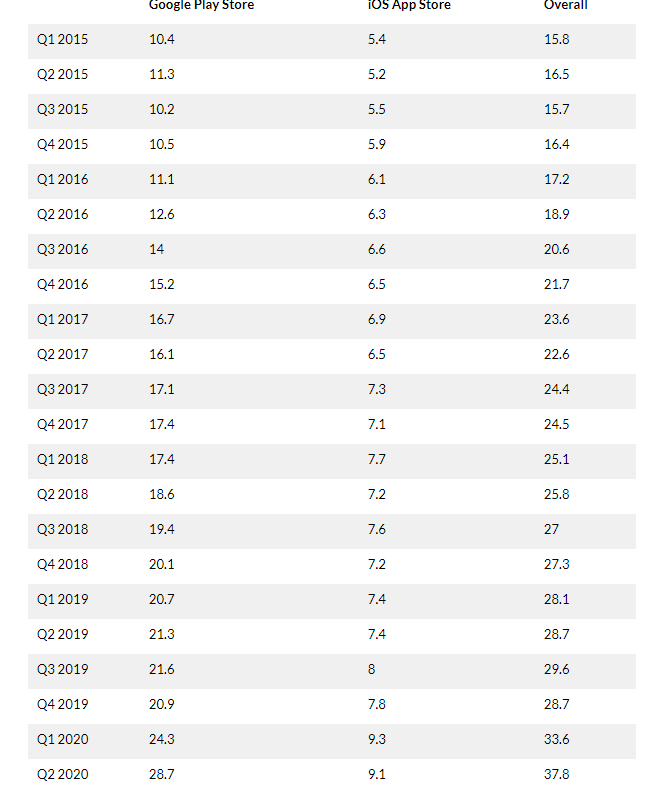
Global App Downloads Quarter-Wise (in Billions)

Source

Nevertheless, it’s easier said than done!

When the talk is about leveraging CX in strategic form the two fueling fragments namely customization and personalization can’t be missed to get the fire on. Where Customization is merely applying changes as per the user, Personalization goes a step ahead and focuses on rendering a user much more than expected.

Given the level of competition in the mobile app development industry, the personalization of apps is the next evolutionary step that comes after customization and is considered a meaningful differentiator for app creators.

Scaling retention, powering user engagement, and deriving consistent conversions is possibly practical by integrating a strong and effective personalization

“When done Right, Personalization lends focus and adds beauty to your App Design.”

A significant shift towards personalization is evident as virtually all industry segments are performing it already but there exist many personalization failures that indicate not to take it sparsely.

The Need of the Hour: Mobile App Personalization 

“Personalization is a step beyond Customization.”

98% of marketers state that personalization advances customer relationships where nearly 89% of the digital businesses have pivoted the liver to invest in personalization.

Personalization is a dynamic process that happens in real-time and in the context of apps it’s about tailoring the app experience effectively aligned with user-specific needs. A user wants to be understood, feel special, and demand for his requirements to be met, and the sword of personalization hits the same.

Mobile app personalization is about drafting everything just for the end-users, all of it individualized and relevant to the user. This implies that your personalized mobile applications can include push notifications (obvious and for sure), recommendations, discounts, tips, and much more centric to the desires of users.

One needs to go beyond the obvious to survive in a hyper-competitive environment. Addressing uses by names, sending them birthday coupons, etc. is old school and not enough. User’s expectations have gone to the next level where they demand to witness tailor-made customer experience right from the first-time app launch.

Let’s learn it from Starbucks.

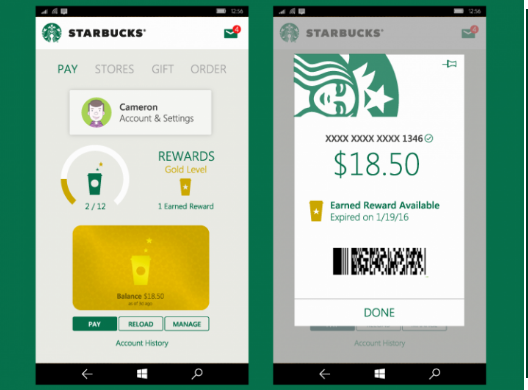
Occupying more than 14.2 million active U.S. rewards program members, the brand continues to solidify its digital relationships by bringing mobile payment with personalized features of earning rewards and making in-store purchases, but in an exceptional way. 
source

The app renders an excellent level of convenience to the users for making their product payments via scanning a barcode (from their smartphone) linked to their registered Starbucks Card. Further, it also gives the option of ‘Shake to Pay’ i.e by shaking their device they can activate the pay screen feature, thus, allowing ease of comfort over one of the obligatory app functions. 

Additionally, the app allows customers to earn stars in the form of rewards via its My Starbucks Rewards program where users can track and redeem their rewards, manage their accounts, and gain access to new product information and promotions.
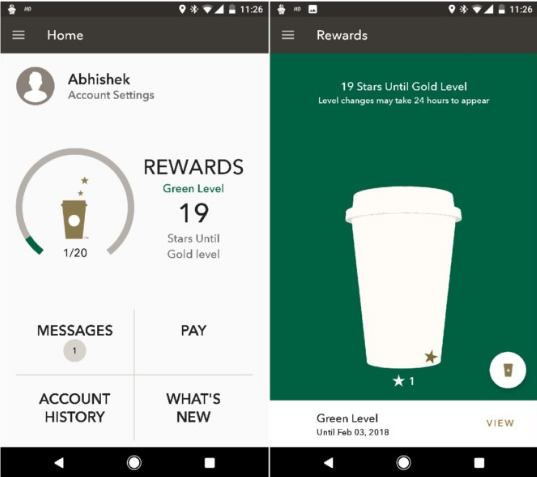
With this one can deduce that

Personalization Attracts & Enhances
-User Engagement
-Retention
-Individual Relationships
-In-App User Experience
-Efficiency and Customer Satisfaction

[Prefer Reading: “Survival of the Digitalist: Technology Driven Customer Experience.”]

Tips and Tricks to Deliver Highly Differentiated User Experience
source

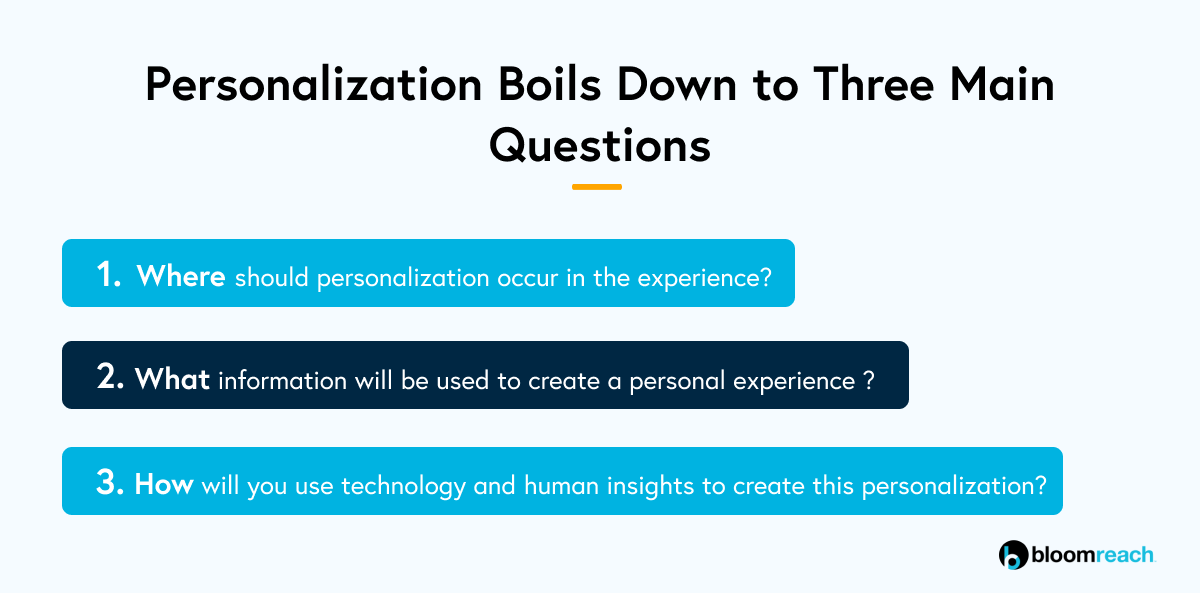
NetSet deeply understands the significance of one-to-one personalization across different platforms and devices and comes with some strategic techniques that are followed during digital product development.

Let’s take a rundown:

#1 Set the User Data & Analytics Backbone in Place

Getting a personalization strategy in place proves to be effective if appropriate user data is gathered and utilized to expect favorable outcomes out of it. 

Before developing a mobile application a deep R&D is required to collect the right demographics, device-type information, geolocation, etc. that helps to capture the fundamental data parameters at the time of the user onboarding stage. (registration/login)

While constructing a mobile app for all-type users, one must get a unified view of every user in real-time that will further refine your techniques. Factors that contribute:

  • In-App behavior
  • Actions and inactions
  • Responses and interactions
  • Product search history
  • Payment mode chosen
  • Common paths leading to conversions
  • And more

Orchestrating user data efficiently and analyzing their traits will get you granular actionable insights to forge relevant user segments.

[Prefer Reading: “Grocery Shopping App Features: Basic, Advanced & Miscellaneous”]

#2 Start Personalizing the App from the First-Time Launch

Remember what I stated above: ‘User’s expectations have gone to the next level where they demand to witness tailor-made customer experience right from the first-time app launch.’

Modern users possess unique characteristics where one cannot apply the ‘one size fits all’ fact. Delivering a high-level personalized experience on the first time launch of the application can get you a positive response, recognition, and recommendations too.

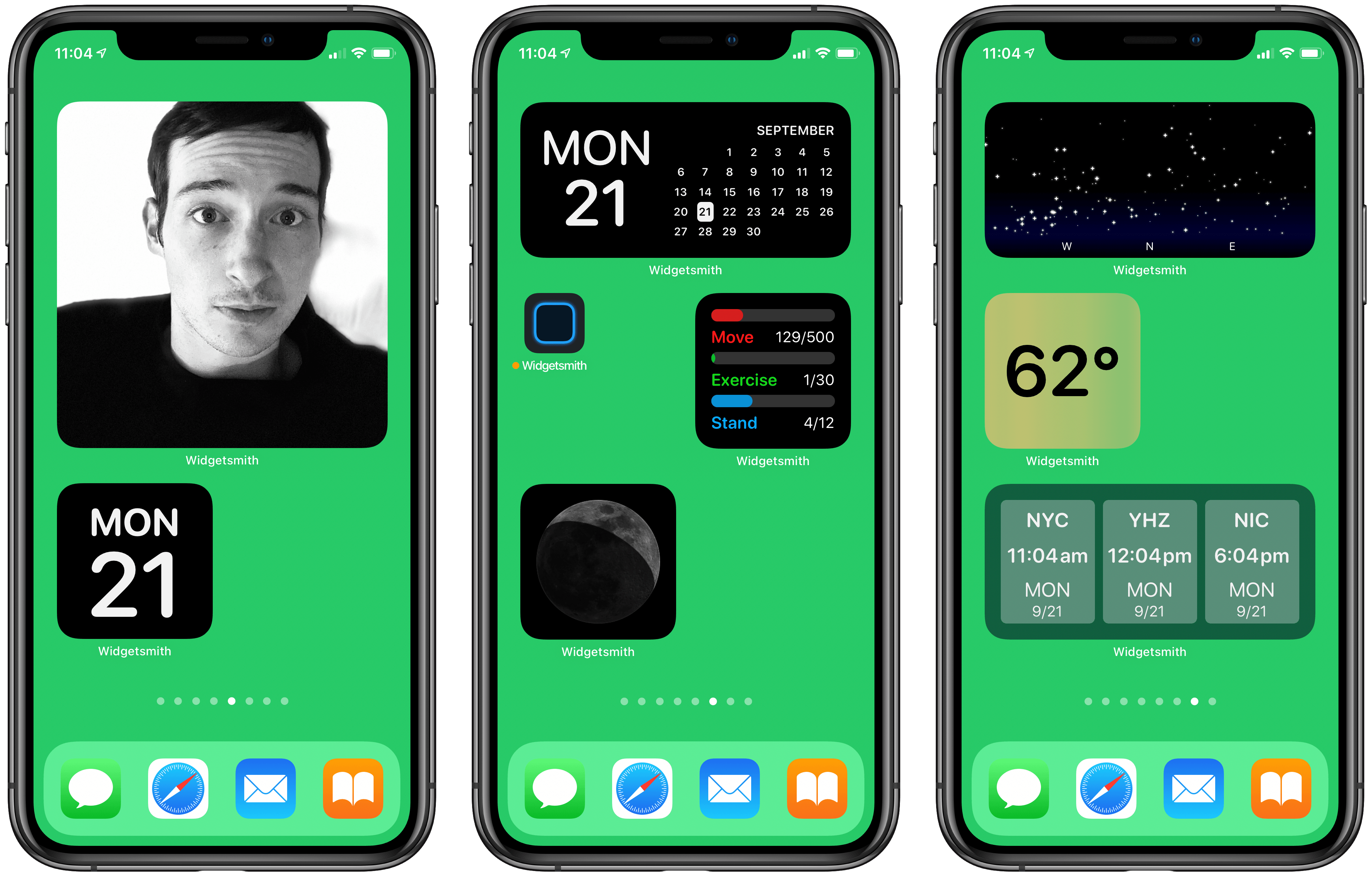
With the collected demographic data points, you can deliver a personalized user experience initiating from the app homepage where you can well manage the homepage screen to educate the operators over key features, functionalities, and usage. 
source

#3 App Navigation be Tailor-Made

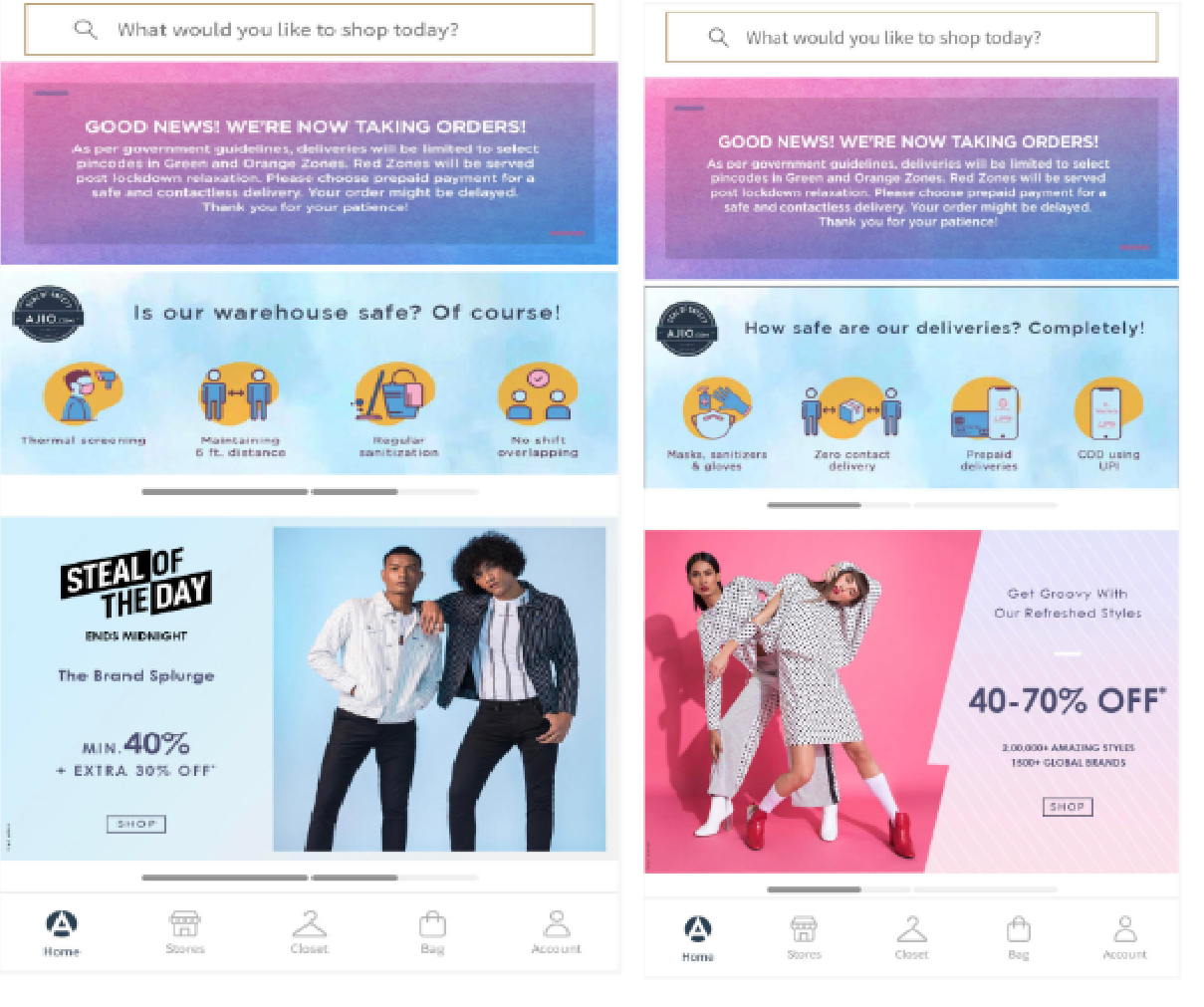
Personalization doesn’t limit itself to merely adding exceptional functionality it can further be explored utilizing other parameters like gender, seasons, time zones, seasons, weather, and much more.

Your app can be harnessed by personalizing CTAs, images, offers, trending products, etc., and be further optimized as per the most common factors that lead towards the path of conversion, thus, individualizing the mobile app navigation journey and offering users exactly what they want.

Haptics and advanced features within the mobile application can increase the chances of user engagement, being an add-on to the app navigation.
Source

#4 Add a Tint of Personalization to the Search Experience 

Big organizations are paying a huge amount of money to know the intent of a customer. 

With this development within AI assistance businesses today can easily acumen the intent of the customer ie: whether the customer wants to purchase the product, book something or want to consume something. 

With the clarity of the consumer intent, you would be able to push the user faster towards what he/she exactly wants. 

You can also easily gather the content or product’s recommendations based on the partial or full search terms written in the search tabs where the AI assistance could further consider the historic searches made by the account. 

The assistance will show a continuous rise in its accuracy with every search user will make, which will reduce the gap in the customer buying journey from the discovery of a product to its purchase. 

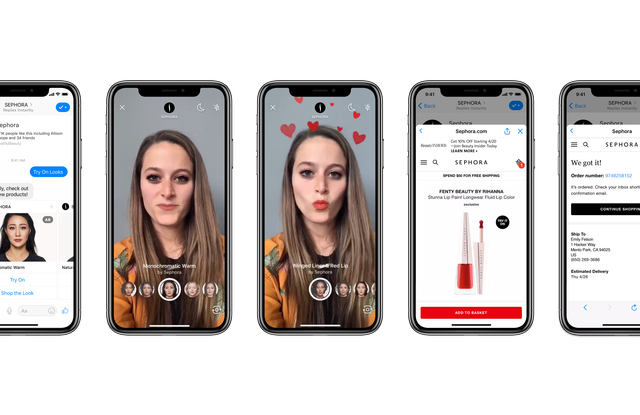
For example: Assume you are an expert in selling cosmetics on eCommerce platforms, you can start suggesting the most relevant product recommendations for lipsticks when a user searches for a particular brand of lipstick.
source

#5 Deploy Live Contextual Recommendations

Text messages still haven’t lost their value and can be best made to be put as in-app messages while focusing on optimizing content personalization by triggering relevant product or service recommendations.

Your user engagement technique must focus on the context of the user content or search and offer product suggestions, knowing their clear intent. This can help you with cross-sell and upsell opportunities, raising the probabilities of increased average order value.


Thursday, 7 January 2021

Essential Features a Chat Application Can’t Afford to Miss


The digital world has been revolutionized by the innovations taking place in the app development industry where enormous experiments take place each day to turn a desire or need into something tangible.

With mobile applications being highly multifunctional, the bar of their significance is laddering towards the peak, eliminating all major physical limitations. Mobile phones transformed ordinary communication while mobile apps have taken the reach of communication to the next level.

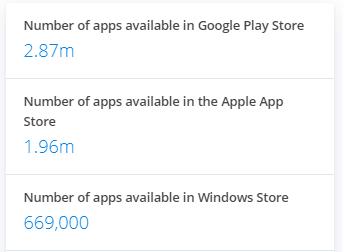
Thanks to the innovations brought up in the mobile app development industry which is one of the fastest-growing verticals in business. Let’s take a look at the 2020 app statistics which press upon its growth and vitality:

Source

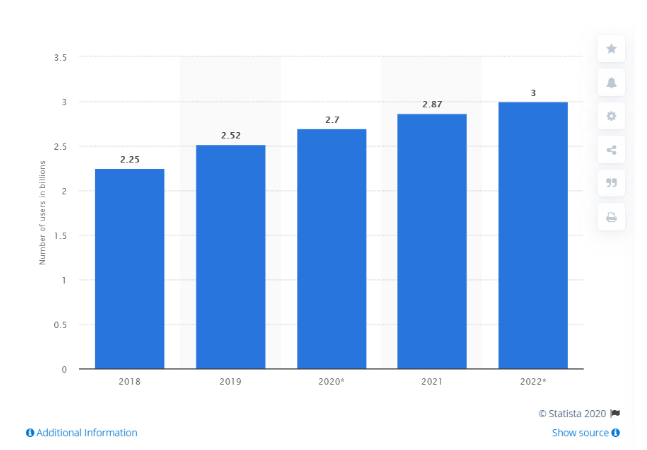
Global mobile phone messaging app users (2018-2022)

source

What users expect from a Chat/Messaging App?

  • Convenience
  • Ease for multitasking
  • Real-Time Text Transmission
  • Unique Stickers/Emojis
  • Chat History & Records
  • 5G Connectivity

Seen globally, expectations of users have gone far and wide where they expect much beyond sharing a text or an image. Feature-rich e-devices and the availability of high-speed internet have encouraged tech businesses and enthusiasts to pay heed to chat app development/ instant messaging apps.

After the rapid growth of social media, there was no chance left to underestimate chat applications which further led to their extensive development making them more popular than ever.

In present times, messenger apps are not only limited to conversing with friends and family, however, have an added scope of targeting businesses and improving their prospects. They have become a key method of communication with customers.

“Chat applications are just a subtype of social media apps with restricted public functions and are expected to ladder revenues in 2021 & beyond.”

A modern chat application must possess remarkable functionalities that can be adapted to any type of chat solution. An ideal chat application has the potential to offer solutions for business-level communication, customer-centric business communication, eCommerce chat, and personal chat.

[Prefer Reading: “Chatbot Development: Enhance the Prospects of your Business Success in 2020 & Beyond.”]

Basic Functions to Embed in a Chat Application

Although the main idea of a messaging app is to send text messages, users love to communicate using other available means too. 

  • Voice Calls & Messages

One can create an instant messaging application with support for voice communication, allowing users to record messages or call other users in re

  • Video Calls & Messages

The same goes here, add support for video calls, messages, or support. Group video calls are tough to implement but are a necessary element as users love this feature and must go for adding it into your app.

Messaging App Essential Features

source

“A modern chat application must possess intrigue functionalities & must be flexible to adapt to any type of a chat solution.”

#User Login

With a maximum percentage of the populace possessing a smartphone, a chat app keeps no restriction to age or gender where a layman could make use of your app for making a video call.

Thus, the process for user login must be kept as simple as a cakewalk and end up the process within mere 3steps, verifying the user via the phone number or email. The easier you make it for your users, the easier it becomes for you to gain its popularity.   

#Data Encryption

With heaps of data being produced every single day from millions of resources, security, and privacy parameters arise concerning the protection of the crucial and sensitive data. Data encryption forms the basis of preserving confidentiality within an app.

Encryption is a way to secure communication between persons/parties exchanging data. Your app must embed end-to-end encryption that ensures your messages are linked with keys that are useful to decrypt the information making it readable for the other party.

Encryption is inevitable for a chat application and is obligatory for enhancing online privacy. 

#Cloud Synchronization

A tremendous amount of data being generated, certainly, needs space for storage. Moreover, the alterations needed must be updated as and when and applied automatically to all other devices.

This is the need of today and is enabled via Cloud Services. Developing a messaging app would require securely store and preserve chat histories and files sent/received. This is made possible with Cloud synchronization that updates and manipulates data on time that can be accessed anytime, anywhere. It’s the best option to

#Geolocation

Today, most messaging and chat apps accommodate the feature of sharing live location with the near ones. Scrutinizing the user demands today, this feature plays a significant role in businesses like transportation and cab services as the current location helps customers to get real-time updates/availability regarding their products.

Adding geolocation features has become one of the necessary traits to be added in the messaging app which further helps to enhance its business prospects.

#Data Persistence for Offline Usage

An application that effectively works in offline mode or possesses such capability is the one favored by all. Where some app features (like wifi or the internet) eats up the phone’s battery, users expect mobile applications to even work in the offline mode, allowing them enhanced flexibility that further adds up to the extended mobile app experience.

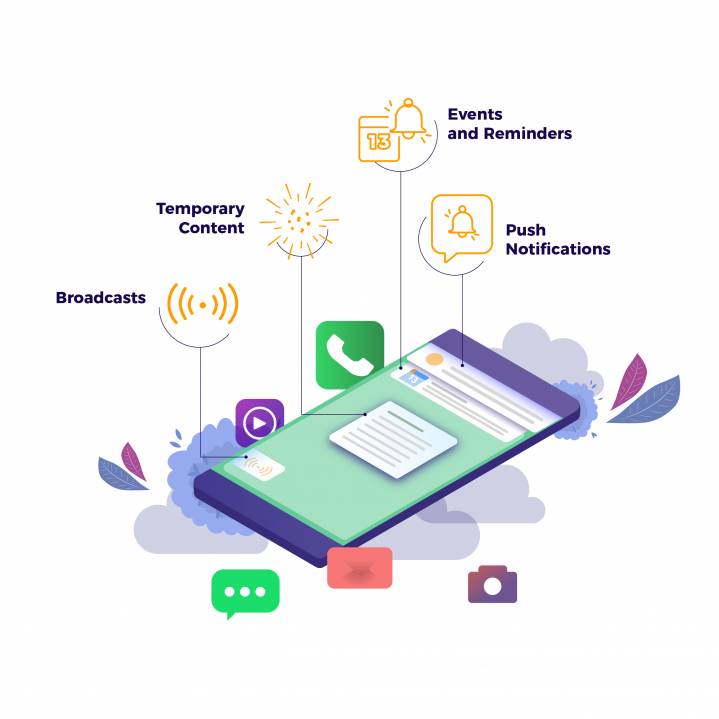
#Notifications

Notifications form an important part of your messenger app that lets a user know about the arrival of a message and also becomes a part of an MVP when the actual app is on trial.

[Prefer Reading: “Enhanced User Experience? Think Chatbots”]

Miscellaneous Features that Stand Out


source

  • Scheduled Messages
    An option that helps a user to schedule and send messages as per the selected time and date.
  • Chatbots
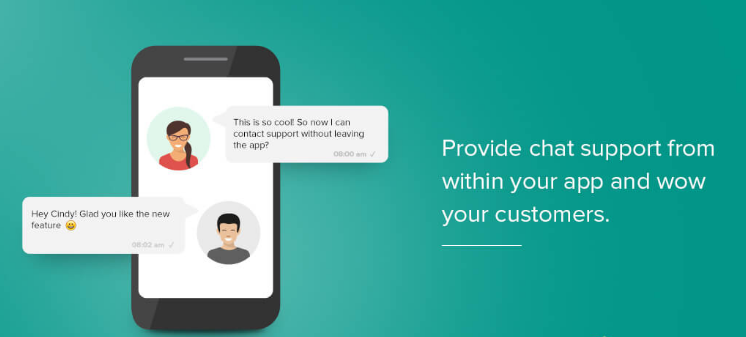
    Chatbots in a chat application? So predictable and obvious. As they can be used to set predefined answers for customer/user queries or messages. Chatbot Development is one of the best business monetize techniques as well if used professionally for doing business.
  • Stickers
    Stickers add a boost to the standard set of features and act as a key factor in leveraging customer experience. Unbelievable, many chat apps (like Viver) have gone way beyond user expectations by offering their own sticker packs.
  • Games
    If you wish to derive user engagement, in-app games are a considerable option to boost an app’s global reach and popularity, especially if you have a specific demographic group to target.

There is no magic that can make an app renowned overnight or can attract ‘n’ number of downloads, just create a unique user experience and offer exclusive, alluring, and intuitive features that are appealing in the eyes of the users.

[Prefer Reading: “AI-Powered Chatbots: Enhancing Business Communication” ]

Factors Influencing the Cost of Creating a Chat Application

#Target Platform

An app is built to be highly compatible while running on an operating system. iOS, Android, and Windows are the platforms to target which calls for a decision to be made to either go for developing a native messaging app or a hybrid one.

Certainly, the cost of development would rise with the demand for platforms chosen for development. 

#Backend Development

Backend is responsible for the app’s security and involves the exchange of data between the app and the database. Thus, it requires robust technologies and algorithms to support data encryption which becomes the second major reason to make your pocket heavy on its development.

#Third-Party Integrations

Third-party integrations of libraries, APIs, frameworks, etc. is an accountable task for enabling various functions in real-time within the mobile chat application.

However, with modern ways, third-party integrations are now easy to embed but add a cost factor indeed.

#Admin Panel Development

The admin panel is sort of a dashboard that helps to monitor and operate the passive functions to be handled by the administrator end and plays a pivotal role in the development of a messaging app.

Operating the app, managing users, analyzing the app statistics, updating app content are some of the functions that combine admin panel development, and involve a considerable cost.

#Customization

Undoubtedly, customization and personalization are cost-adding factors and are a bit high in price as compared to building standard/basic components. 

Animations, graphic designs, special effects, customized app features drive the cost up, thereby, leveraging customer experience, and mobile app experience.

Monday, 28 December 2020

Can Progressive Web Apps (PWAs) Take Over Web Development?


“If you are to develop a web app today, you are already on your way to building a Progressive Web App.”

While browsing websites on the web, there was a time when people imagined witnessing the same experience on their phone with enhanced usability, flexibility, and accessibility. And, this wish was granted to people by Google at the end of 2015 by releasing a new approach to application development.

Progressive Web Apps!
These are web apps featuring progressive enhancement and leveraging contemporary web techniques to deliver a native and rich app-like seamless experience to users. 

“PWA’s bring native app-like experiences and functionality to the mobile web and proves to be an extremely efficient way to deliver digital experiences.”

Progressive web apps feel more like native mobile applications and act as a bridge between web and mobile that offers a superior web experience on mobile devices. PWA is not a new framework or technology rather is a method that has leveraged web app development and has transformed the shape of typical mobile websites.

Nevertheless, there have been many questions arising about the PWAs replacing native apps as they are efficient in solving problems that exist in native applications and responsive web design.

Source

It’s true that PWA offers less functionality than its native counterpart, but in the context of usability, it outperforms a native application. However, if the focus is on customer experiences even native apps can raise the bar, meet expectations, and continue to exist.

With all that said, let’s highlight some of the best features of progressive web apps:

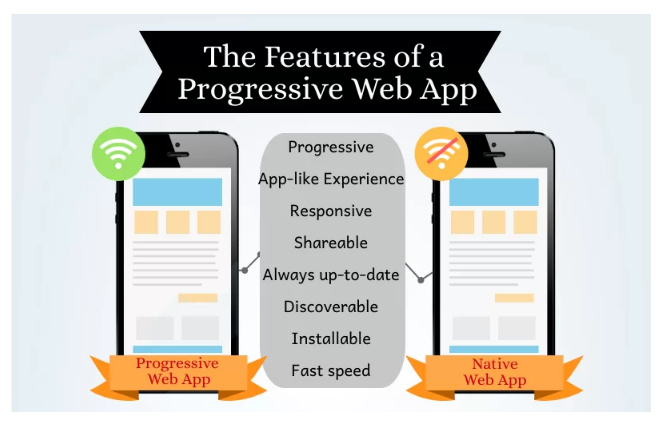
Progressive Web Apps Differential Features

“PWAs are just websites that took all the Right Vitamins!”

-Alex Russell & Frances Berriman

PWAs is a set of best practices that accommodates the following features to make a web app function similar to a desktop or mobile application.

-Connectivity Independent
PWAs work smoothly offline with the help of service workers even if the internet connection is unstable.

-Responsive
Progressive web apps work effectively on any e-device be it smartphones, tablets, desktops, or even laptops.

source

-App-like Experience
They offer the same look and feel as that of native mobile apps and deliver the same level of user experience with app-like navigation and navigation.

-Shareable
PWAs can be shared easily with a link or a URL and can be accessed then and there. (easy to install)

-Re-engageable
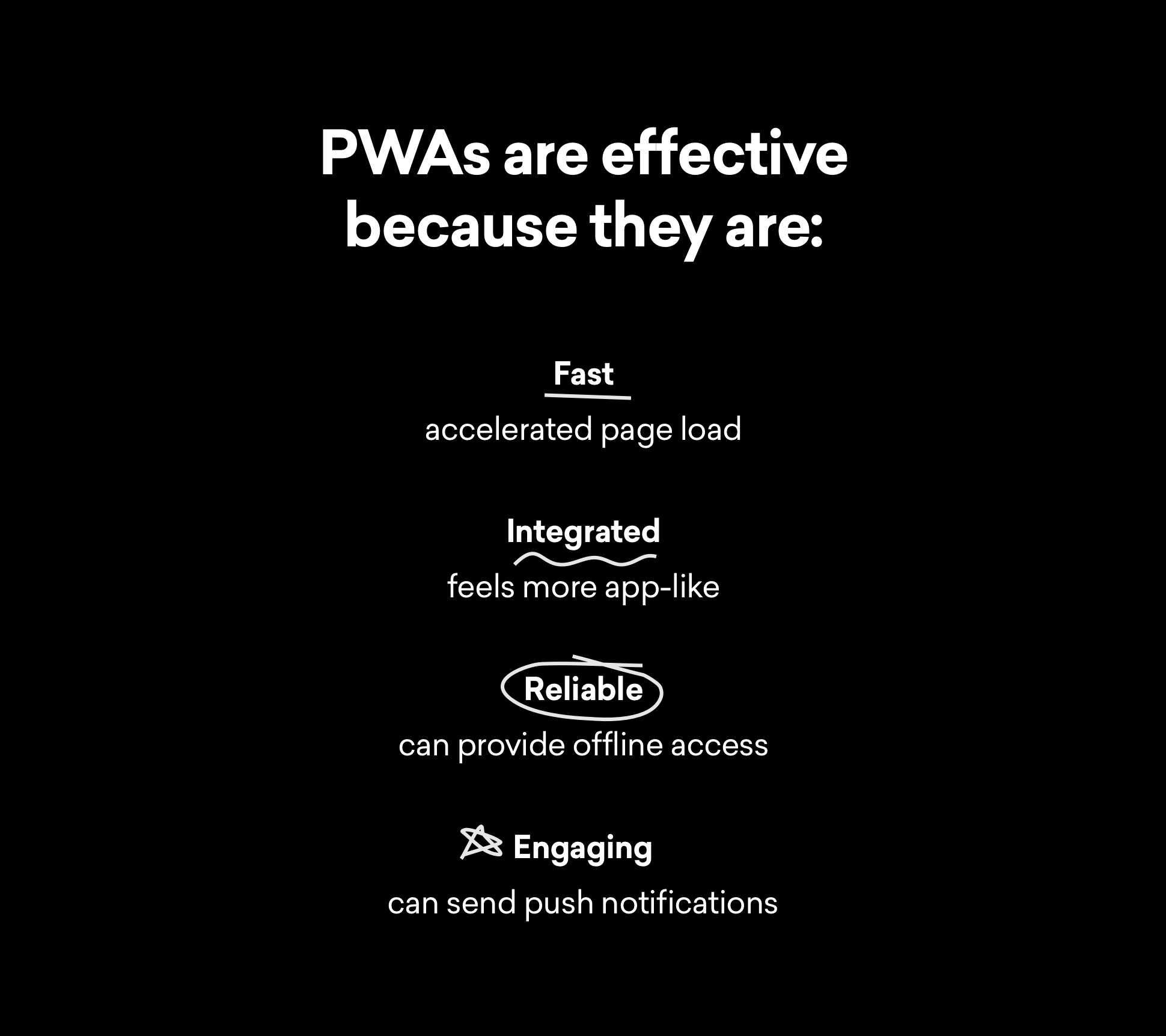
As such apps render an app-like experience, they are capable of maintaining high-level user-engagement and app retention.

-Fast Speed
Such apps are developed to empower the faster loading speed of the web pages. Users can witness high-speed load time with content displayed in no time.

-Always Up-to-Date
Progressive web apps are always fresh as they are bolstered by service worker update processes and need no updating.

PWAs occupy tangible potential for businesses to scale their digital transformationhighlighting significant performance improvements in responsive apps.

[Prefer Reading: “Multi-Experience Evolution: New Experiment in Mobile App Development.”]

Key Components of Progressive Web Apps

Apart from features, there are some vital components that surge the importance of PWAs.

#1 Service Worker
Service worker has a major role play in making progressive web apps a considerable and favorable choice to build. This segment enables websites allows to download or cache certain files locally on the device.

While accessing a PWA for the first time, the service worker downloads the content/files and retains it and with those files already cached, require nano-seconds to load the page to be viewed. PWAs enable users to have access to the content/files even in offline mode or in case of limited connectivity and also enables websites to send push notifications.  

#2 HTTPS
With service workers in action, they intend to deliver a website over a secure connection. PWAs enhance Transport Layer Security that sets standards for data exchange between two applications where data integrity in a website is served via embedding HTTPS and installing an SSL certificate on a server.

#3 Background Synchronization
The service worker also influences this trait where it halts the action and delays them until it receives a stable internet connection. Say a message sent before the connection vanishes is marked as sent and is delivered as soon as the service is restored.

Servers can send updates to applications at regular intervals for self-updating when the connection gets restored.

#4 Web Manifest

It’s a JASON file that gives the progressive its native app interface appearance where the manifest allows a developer to control the app display and how it can be launched. 

[Prefer Reading: “Latest Trends in Web App Development Dominating 2020 & Beyond.”]

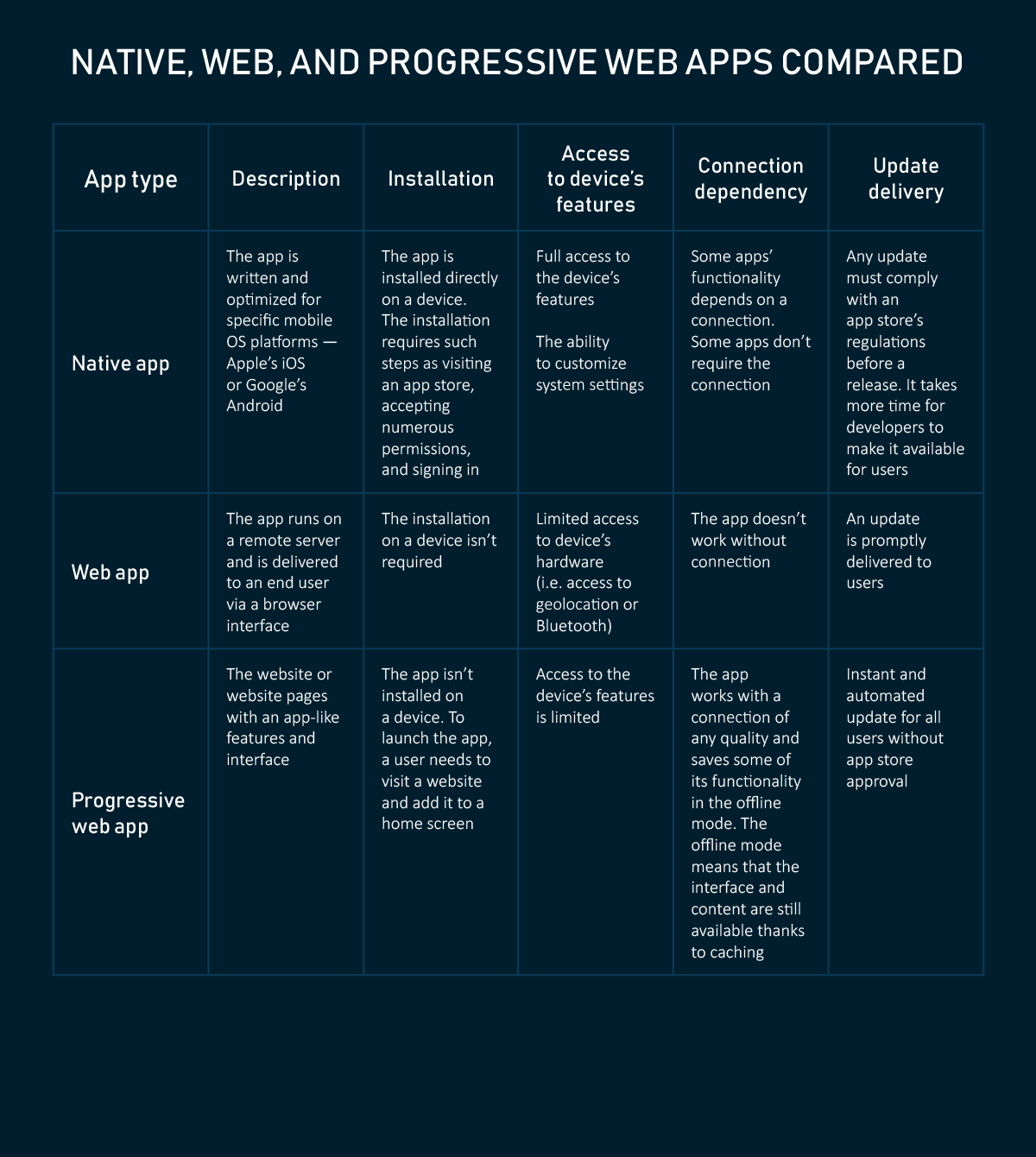
The Native, Web & PWA Comparison

Progressive applications are based on open web standards and are written primarily, like a conventional web application, in HTML, CSS, and JavaScript. In addition, they are extremely flexible and adapt their functions to the framework of their execution. 

The exact capacity of a PWA always depends on the browser and terminal on which it is run, but also partly on the operating system.

Are Progressive Web Apps the Future?

With developers entering the uncharted technical territory, web applications have been reformed with a complete revolutionary potential where the progressive component refers to the app’s ability to adapt itself to the context in which it is to be used.

The benefits of PWAs are obvious and promising:

  • They do not require downloading & installation
  • They are automatically updated every time they are opened
  • They save resources and do not necessarily depend on internet connectivity 
  • Their multiplatform nature allows them to be tested online before actual rooting into the device

The list can be counted for more advantages where progressive web apps are already prepared to show comparable performance.

From a development perspective and given that only one application has to be programmed that can act as a website and multiplatform application, the labor and cost savings involved in creating a PWA is another component in favor that benefits both providers and users. However, what is still lacking is the support of all native mobile device features.

At the level of functionality, PWAs can only seriously compete with native applications if they can use the capabilities of a device in a similar way, even if they cannot match the native ones in terms of use options.

[Prefer Reading: “How Much Will it Cost to Develop an Ecommerce Website with its Native App?”]

Thursday, 17 December 2020

Business Growth Tactics to Keep Up the Pace in 2021 [100% Proven]


2020 has been a challenging year for all humanity, and of course for companies in most industries, as it has forced them to work on sustainability plans to face the different challenges left by the pandemic. Companies are planning what 2021 and the years to come will be like when they expect profitable and sustainable growth to be more and more competitive, but how to make it possible?

There is a need to compile all the previous year’s experiences and identify opportunities for growth, development, and competitiveness and make counterintuitive choices at the right times and thus obtain profitable growth.

2021 is straight around the corner and if you haven’t crafted the game plan for the year ahead, better initiate it, taking into consideration the peaks and valleys of the previous year’s plan and schemes.

Now, let’s take a rundown at some proven techniques to be applied:

Business Growth Trends to Look Out for in 2021

#Revisit the Fundamentals

Whichever business type you delve into, there are a few elements that you as a brand/identity need to focus on. 

What you offer, how you want to outreach, what you will do, what you used to do, and many other interrogatives will surround you while you step into creating a growth plan for your business.

And then it’s time to re-examine the following sensitive segments that have a direct influence on business progression:

-An Ideal Customer
Ideal Customer.
Besides having the list of buyer personas and target audience, rethink the ideal customer of today and tomorrow. 

Make a comparison list and pen down the features, patterns, behavior, elements, needs, etc. of the present and future customers/clients that best describe them and drive them by putting an impact.

This will help you build a robust base for customer acquisition.

-Unique Selling Proposition/Points (USP)
If you think your business is unique and no one has ever done it before, you might be mistaken as the idea or concept might be in construction or would have already been used by someone.

So again, get down to reform your unique selling points, simultaneously not keeping this misconception that you have no competition around or across the globe. Even if you are different, work on how you can be better than the rest. 

Your product/service must be a revolutionary asset to promote where there is a great need for you to work on keywords so that customers can easily find you on search engines. And you are wise enough to know how Google rankings can be laddered.

-Mission Statement
Once the above crucial milestones are achieved, get set to forge a mission statement that requires you to do a ground-up on your work training, good-bad business experiences, and the real value you ought to provide to the end-users.

Well, this might consume very little time and effort as you would hardly see very little changes to make in this segment.

-Target Platform
The means of marketing and the mode of doing it are plenty and extensive both online and offline. Business marketing has a significant roleplay in accomplishing business tasks and, thus, pre-planning is what will lead you to the road of success.

Draft a listicle of 5-8 different platforms that have generated potential prospects and leads for you and act as the essential need for future business targeting.

#Customer Experience be the Utmost Priority

What actually we understand by customer experience?

If I were a layman, I would simply infer customer experience as:
An individual’s experience during his overall journey with a business or a brand (with all points of contact) matches the levels of the individual’s expectations.

You show love to customers by developing customized mobile apps, personalized beauty products, feature-rich websites, awe-inspiring sports shoes, and many others as per the different niche.

But is your love for customers reciprocal?
From many, the answer comes No.

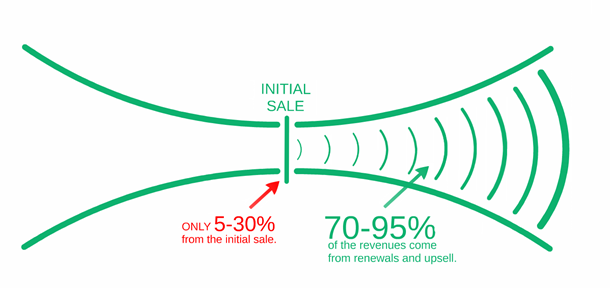
It’s surprising and hard to believe that SaaS companies, running with a subscription-based model, generates between 70%-90% revenue from renewals and upsells bolstered by existing customers.

Source

The health of a business is directly proportional to its ability to retain its customers and acquire new ones and to raise the banner of health it’s necessary to ensure that your customers are happy and contented.

What makes a happy customer?
Now it’s a simple thing to understand. 

Customers bought a product/service from you, they showed their trust in you and expect to get a clear business benefit from you. Now, to make them happy and delighted you need to make sure that they get the business benefits they hoped for.

“77% of customers would recommend a brand to others even after having a single positive customer experience.”

Thus, to achieve enhanced customer experience, make sure that the people who gave you their vote of trust must get those advantages that caused them to sign up in the first place. 

source

Furthermore, good customer service also adds to bringing up a high-level customer experience where a short response time helps to increase sales, improve customer satisfaction, and prevents losing your customer(s) to a competitor.

[Prefer Reading: ‘How to Create a Customer Journey Map that Improves Customer Success?’]

#Personalization is the Key

source

Earlier personalization had results like

‘Wow, they know my name!’

Now it’s more like:
‘How do they know about my last purchase?’

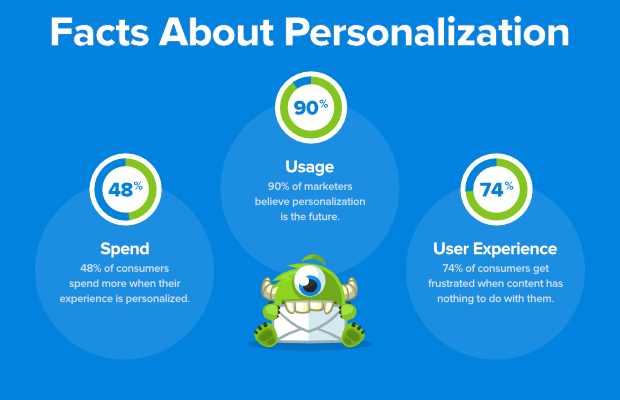
Personalization is no new but still is an effective technique to be necessarily applied in the new normal of doing business. It’s true that Facebook and Google kind of spy on us but that’s merely to predict our online behavior so that they can deliver the most relevant search results to the users.

And another for a cold one:

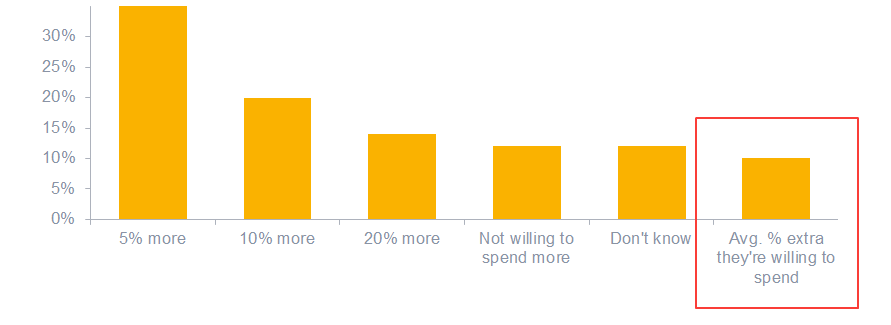
“69% of the buyers can willingly pay more to witness a more personalized experience in their purchases.”

And, that’s no harm, as it’s we who feel privileged at the moment when we get the right thing at the right time when we need it the most.

And this is exactly what your buyers and customers desire.

Personalization is an effective marketing technique that can do wonders in acquiring new customers while retaining the existing ones.

Tricks to Leverage Personalization Meter:

  • Recommend products/services based on user interest
  • Promote exclusive one-to-one offers, targeting individual personalities 
  • Allow customers to choose the mode of communication, the type of service to avail, the time intervals of delivery, and much more falling into the category
  • Be aware of the customer history & intent each time they engage with you

[Prefer Reading: “B2Me: Marketing where Brands Get More Personal.”]

#Align & Streamline Sales-Marketing

Did you know?

Sales and marketing teams when alined together for work can output powerful results:

  • 38% higher win rate
  • 3x times growth in customer acquisition
  • 32% higher revenue
  • 67% hike in closing deals
  • 19% faster revenue growth

This is because the right prospects are being streamlined through the sales/marketing funnel where their alignment is worth the effort. ‘Lead Quality’ is a topic for a long debate, nevertheless, the duo of both the teams working hard generate high-quality leads with more improvements in the conversion rates.

Benefits Falling Under:

  • Crystal clear understanding of customer
  • Better engagement between teams
  • Clear mapping of the customer journey
  • More feedback from the customer and better implementation of the same
  • Development of a more defined and targeted strategy

#Kingpin Data-Driven Decision Making

Instincts work, but data-driven decisions are the ones that derive as expected results in real-time. 

One must be relying on data today to make smart business decisions!

Suggestions, ideas, and opinions do add up so why not take them up by real people who will render real insights in the form of data which can help you make a data-driven decision that would be fast and based on practical thoughts and customer feedback.

Data-driven decision-making (DDDM) forms a base over facts, metrics, an analysis that guides business decisions that well-aligns with defined objectives, and undertaken initiatives. 

[Prefer Reading: “Data-Driven Decision Making: How to Make Smarter Decisions to Fuel Business Growth.”]

Afterwords

Defining objectives and goals are old schools as at this point in time we know what we have gone through and are very clear with the business motive. The change of scenery requires the adoption of new norms more than ever as the speed of customer/consumer reaction becomes decisive.

It’s true that we are facing a 2021 scenario paradoxically of ‘stable uncertainty’ but there is a ray of hope for all types of businesses that can broaden the horizons of the road leading to success and achievements.

Companies should never stop and draw proactive strategies for the year ahead as there is always excessive hope of growth in the crisis time which only needs to be explored aggressively.